King of the castle

In the warm sunshine today, 12.5 degrees! Henry and I went exploring.

As we drove to Fotheringhay, we passed daffodils in flower and flocks of geese sunning themselves by the river. Red kites decorated the blue skies at every turn.

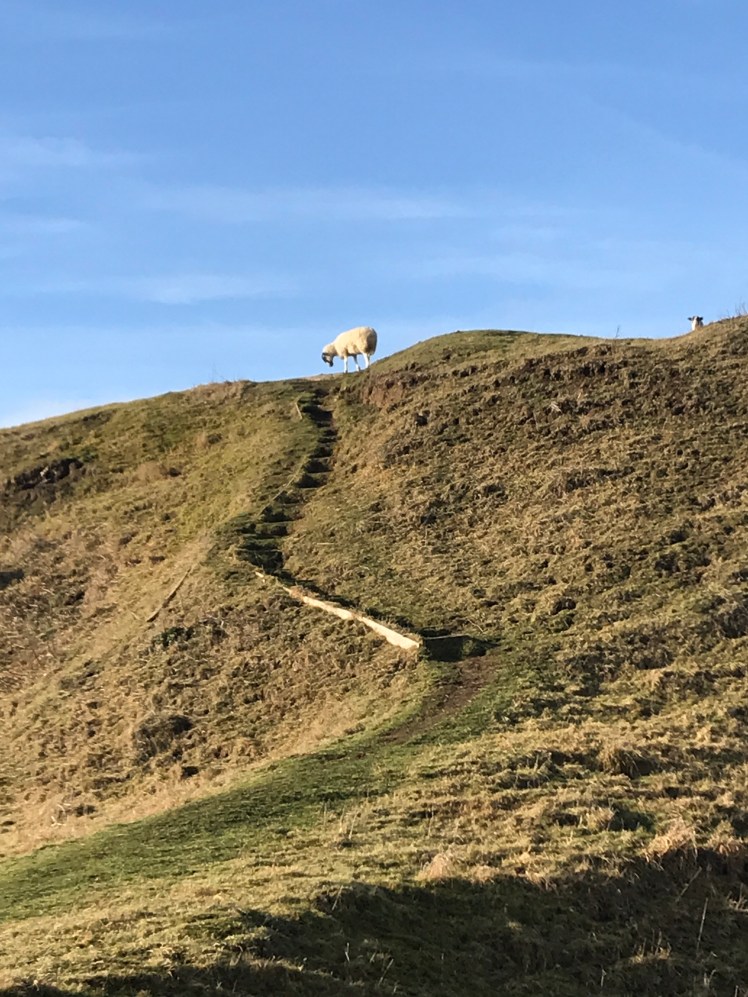
We strolled up to the castle mound . The sheep had control and one was definitely king of the castle !

This slice of history was covered in sheep and obviously at other times of the day in rabbits galore. It is the sight of Richard III birth in its great hall and the execution of Mary Queen of Scots.

The Sheep were very photogenic .

I liked the sheep’s wool floating in the breeze amongst the branches rather like decorations or offerings.

This mound has been involved in some amazing stories of our history . It was founded in the early 12 century built by the Earl of Northampton. It then on his death became passed to Scottish kings, through the marriage of the Earls widow. In 1452 Richard III is born here and lives here for six years. Henry the eighth gives the castle to Catherine of Aragon , and then subsequent wives!! The most notable time is the imprisonment of Mary Queen of Scots and her execution on the 8th of February in 1588.

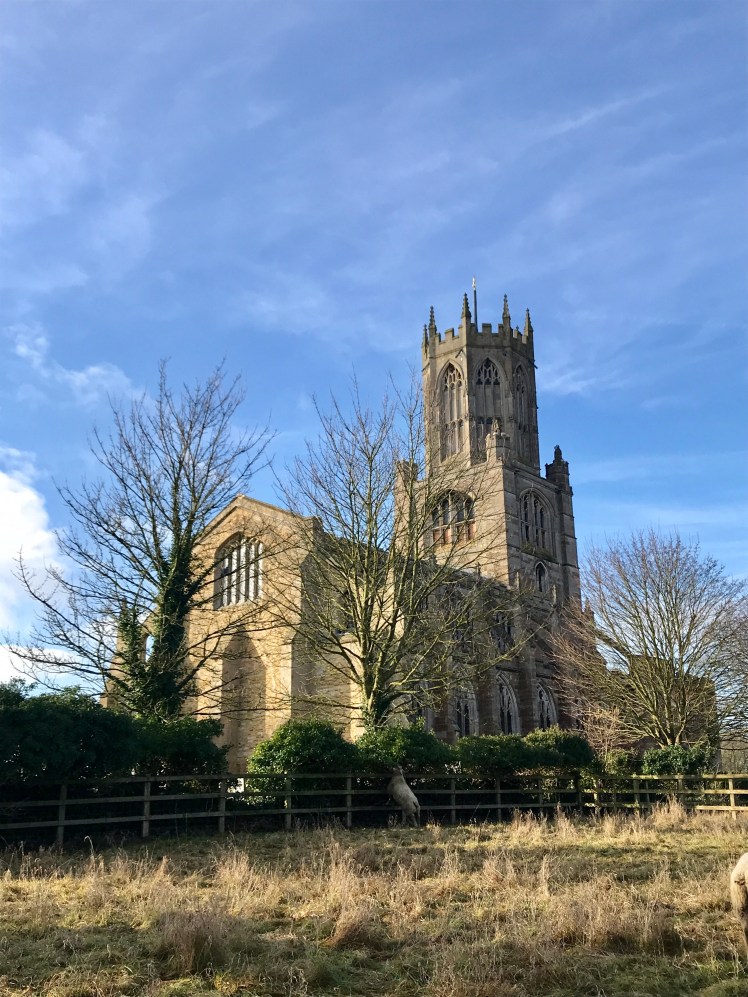
There is some information to read about the historical links and stories in the church.

Today Fotheringhay is a quiet beautiful village sitting on a sweeping bend of the River Nene , it certainly isn’t at the centre of royal power struggles. It is a wonderful place to visit and although there isn’t the building of the castle it certainly has an atmosphere of time gone by.
Monumental Encounter

Today I travelled to Ely in the Fens. There is the most beautiful cathedral which is incredible. However while walking through the grounds there was an amazing plane tree. Huge and wide, we were amazed at its shape and size.

Through the stone arch we were struck by the biggest plane tree we had ever seen. Truthfully we stopped open jawed staring at the amazing tree.

On return home now sitting in a car park dropping off to a music group I just typed in plane tree Ely.
Amazing this is the largest plane tree in Britain planted in 1680 !!

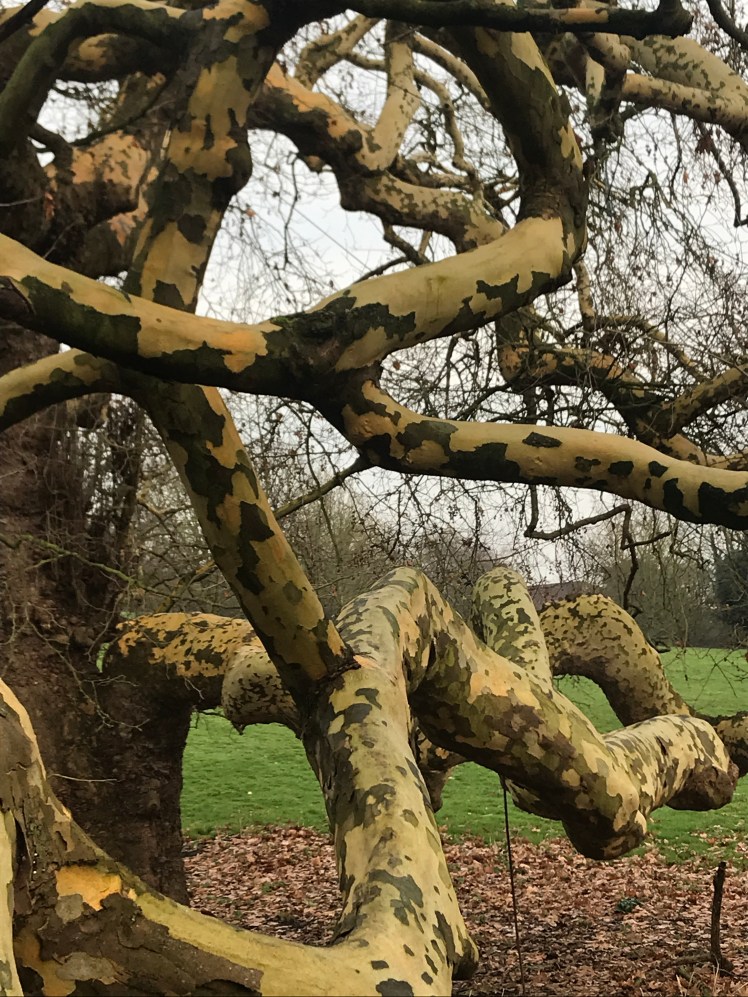
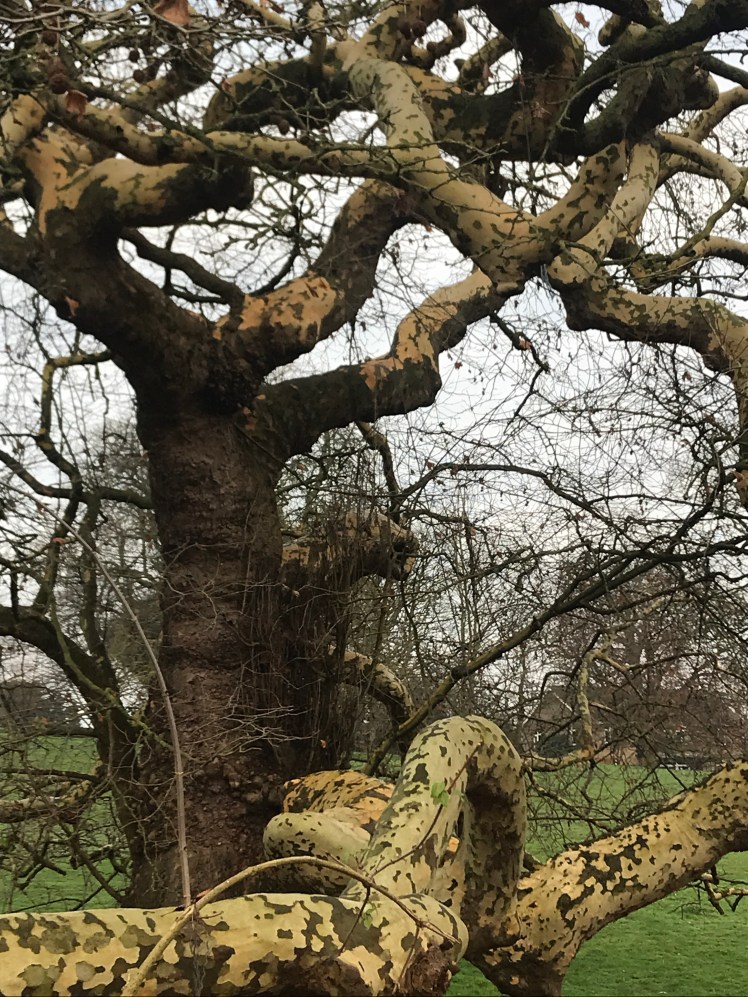
I didn’t take a photo of this monumental tree but I did take some photos of the other plane in the grounds.
I have found an old postcard showing this trees position with the amazing cathedral too.

In June 2002 and in celebration of the Queen’s Golden Jubilee, the Tree Council designated the Great London Plane Tree of Ely as one of the ‘Top 50 British Trees’ .

Here is a little bit of history about these plane trees.

After the ravages of the Civil War, restoration projects in Cambridgeshire included the Bishop’s Palace at Buckden and the Bishop’s Palace at Ely. They have given us the oldest living examples of the London plane in England. At Buckden, Robert Sanderson, (Bishop of Lincoln 1660-1663), is said to have been presented with two London planes; both are still growing healthily and one has reached a great size. At Ely, Peter Gunning, (Bishop of Ely 1675-1684), also planted gifts of trees, a London plane which is now a massive tree, and two Oriental planes.

The London plane at Barn Elms, London SW13, is probably from about 1685, planted on lands then belonging to the Archbishop of Canterbury. It is London’s oldest and largest plane.

Interestingly there are stories about the London plane and how it came to be . It is a hybrid between the oriental plane and the American plane and was brought to Britain from Spain.

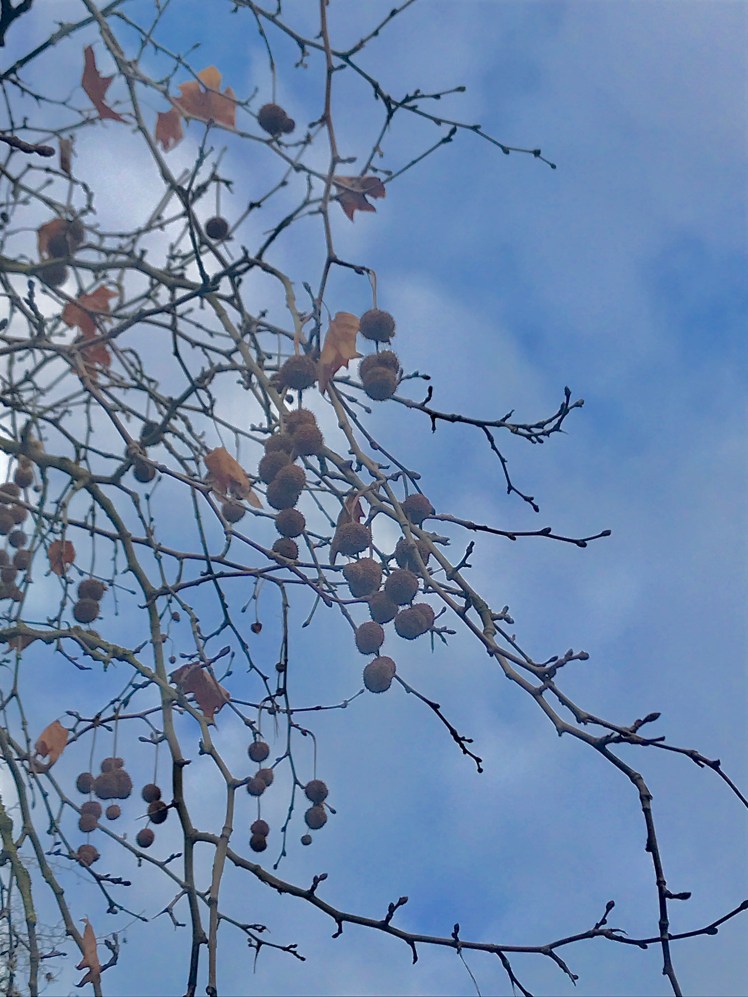
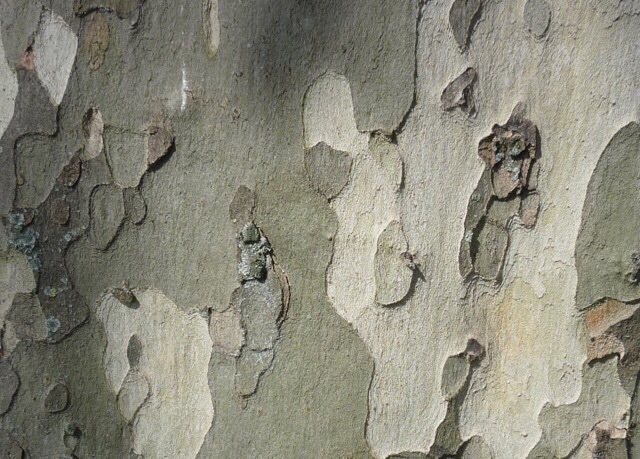
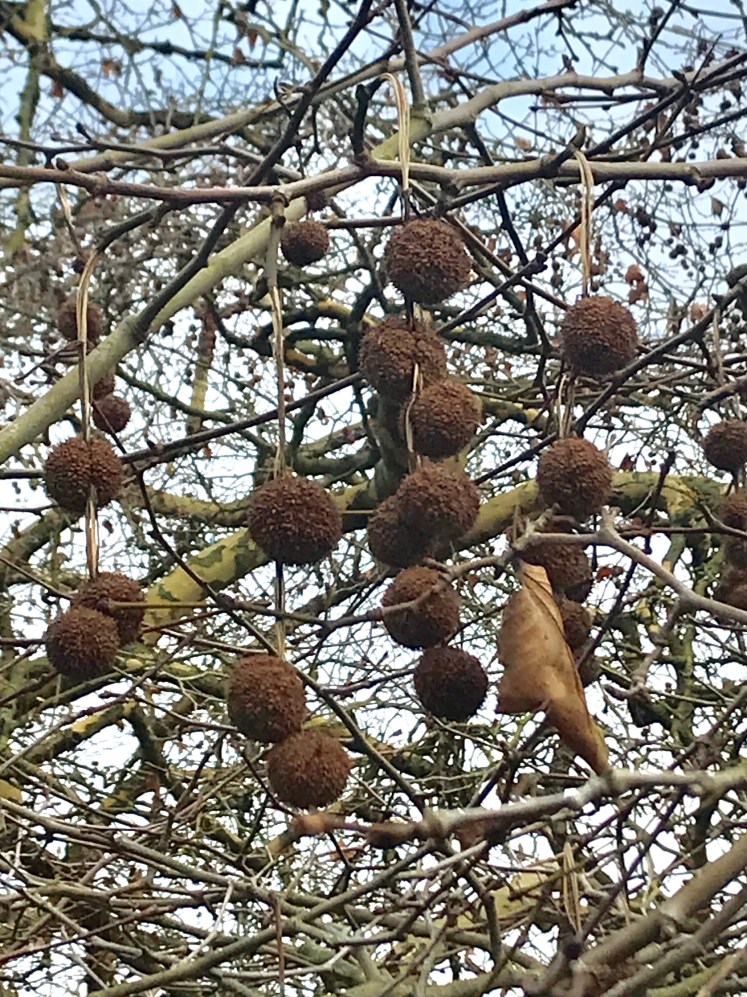
They are easy to identify as their bark is characteristically colours and flaky and they have spiky ball like seeds.

 Amazing what you can stumble across when out and about !!

Hibernation hang out

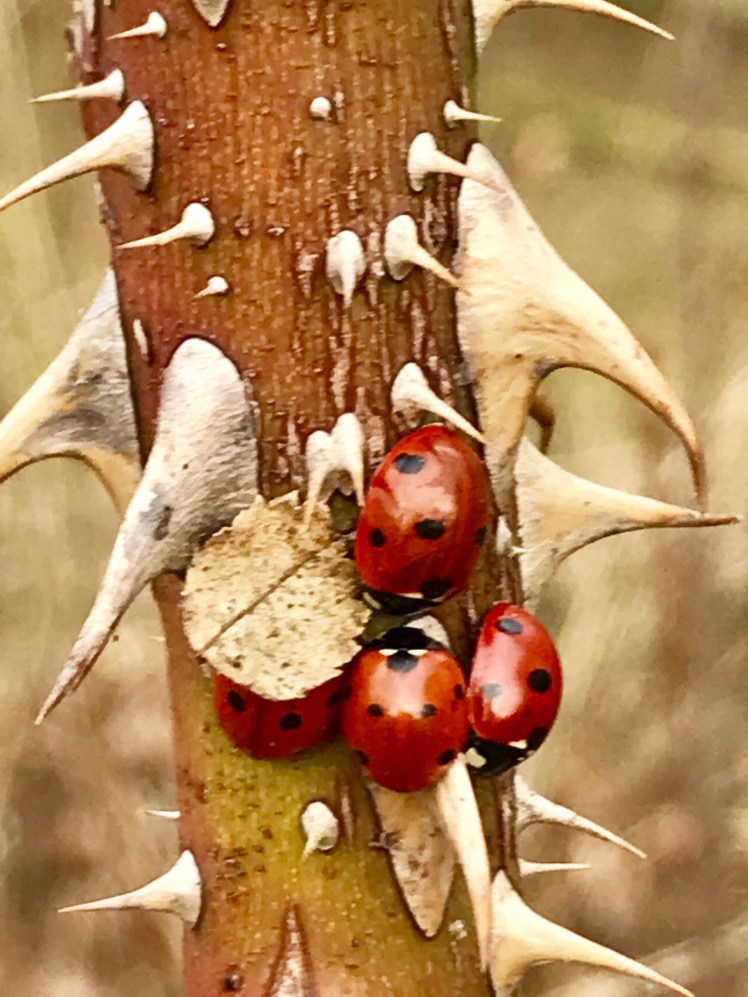
These seven spot ladybirds have found a protected place to hibernate.

I noticed these yesterday out walking. They hibernate in winter when there is no food source .

Temperature and day length trigger synchronous re-emergence in spring, in time for the arrival of food.

Ladybirds have to wait for unfurling leaves, and then for the aphids to get going too.

In Northern Europe temperatures above 12°C rouse the common seven pot ladybird.

It is very cold today it actually feels like winter so these ladybirds probably have a long wait until food !

Sitting on the dock of the bay .

Actually it was the jetty at the reservoir called Pitsford Water close to Northampton.

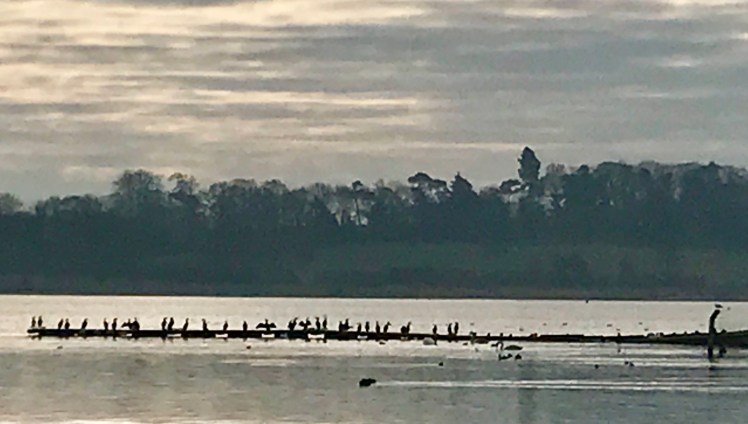
The Cormorants were lined up along the jetty with regular fliers coming in to land. Several were in wings stretched drying mode. On the water there were plenty of cormorants diving. It was cormorant paradise.

I would love a long lens to capture these types of images it will have to be on a list to save for.

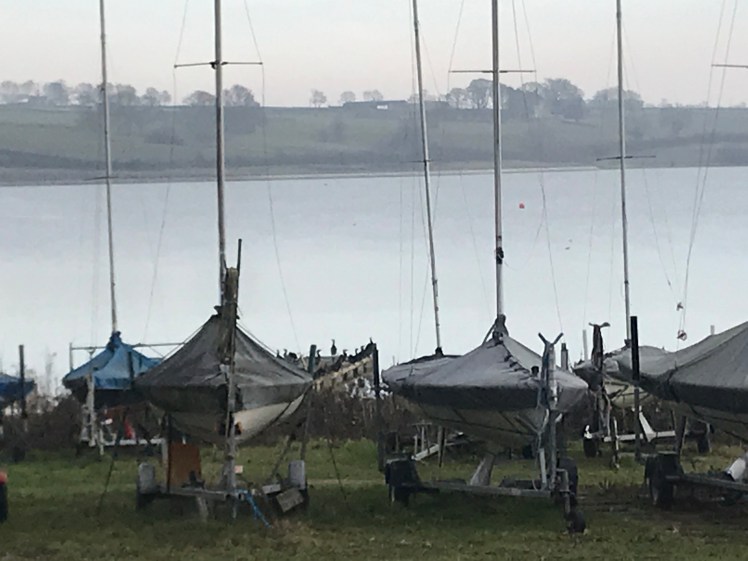
On the way back from my walk around the reservoir I tried to photograph the cormorants from the jetty .Not very successful but as you can see there is plenty of sailing at Pitsford.

Pitsford Water is a large reservoir with a causeway across the top end . There is a good path to walk or cycle the 7 miles around it.

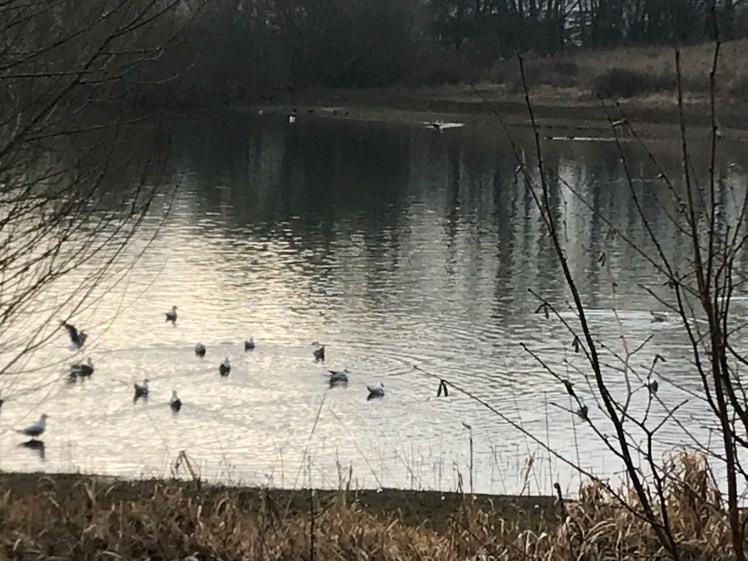
It is a designated SSSI for wintering birds and there were certainly plenty of birds there yesterday with flocks if terns and ducks flying in and swimming together in large flotillas.

A list from their website of the birds commonly seen –

You can expect to find:

  • Black-headed gulls
  • Little egrets
  • Common Turn
  • Great northern divers (common loons)
  • Great crested grebes
  • Slavonian grebes (horned grebes)
  • Song Thrush
  • Swallows
  • Goldeneye
  • Willow Warbler
  • Lapwings
  • Chiffchaff

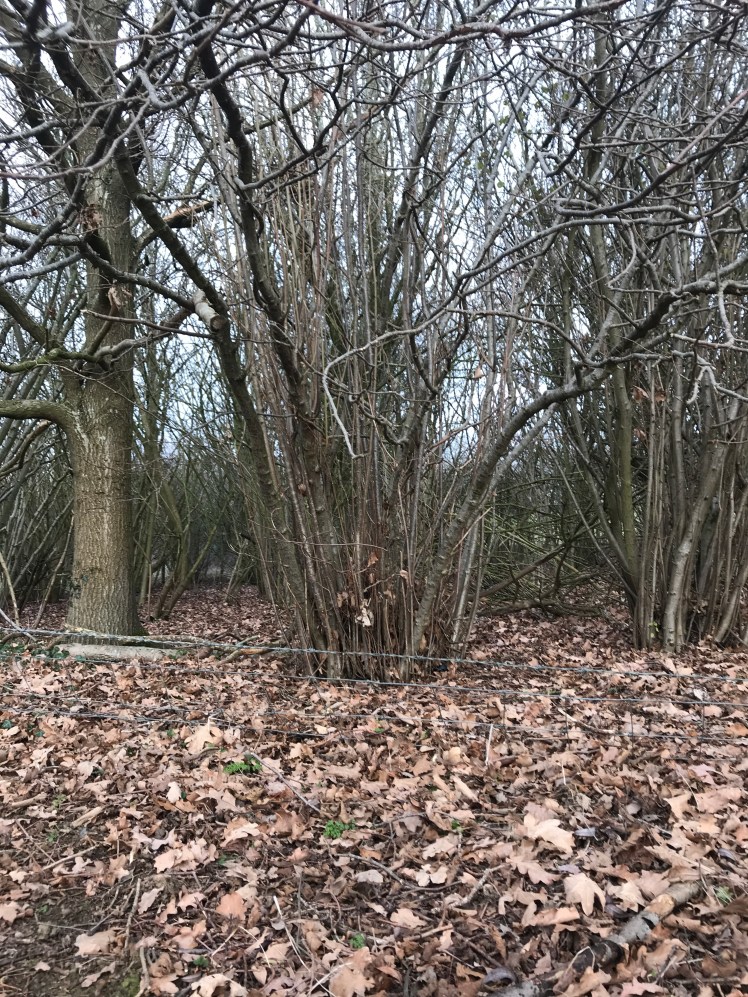
There is a mixture of habitats to explore throughout the year. The coppiced hazel stands were in full catkin.

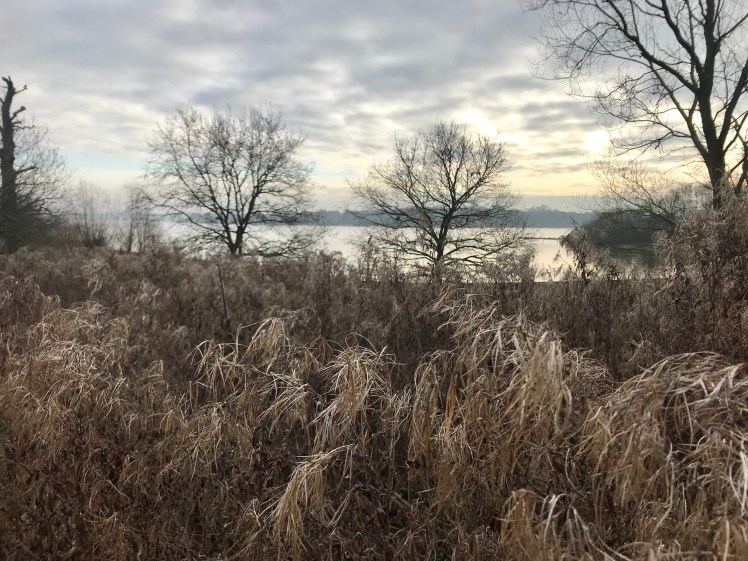
The water itself is beautiful for a walk.

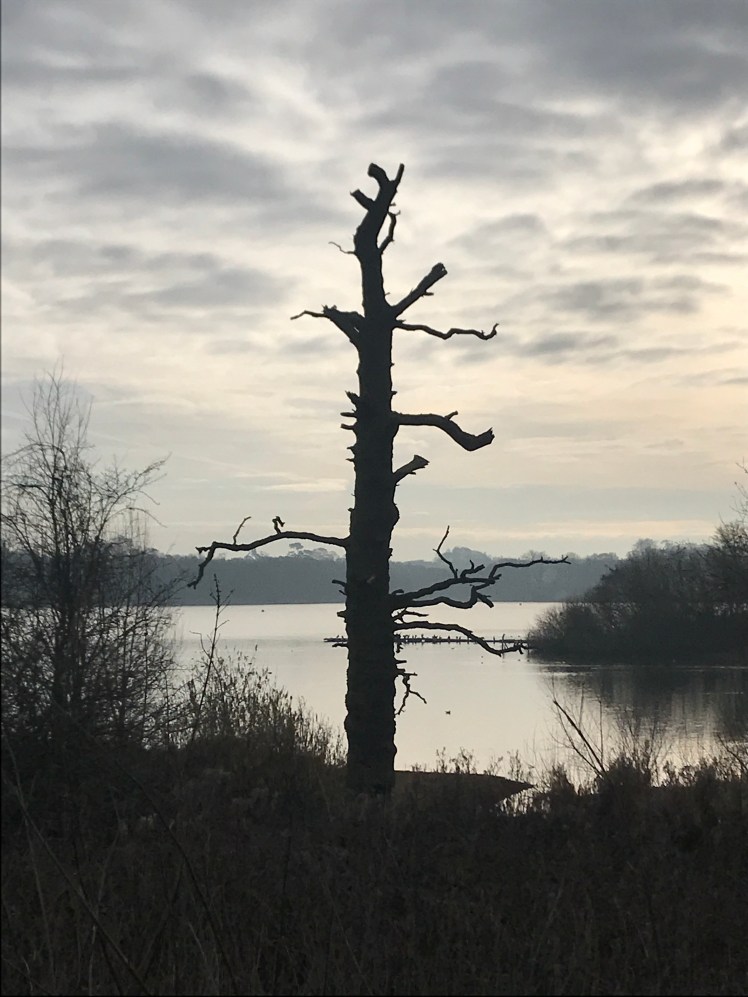
Fantastic large dead tree against the skyline , dramatic even on this grey morning.

I tried to creep through the trees to photograph a huge flock of terns but their super senses sent most of them away !

Pitsford is a good walk with lots to see , I will be returning through the year .

A dusting of pollen

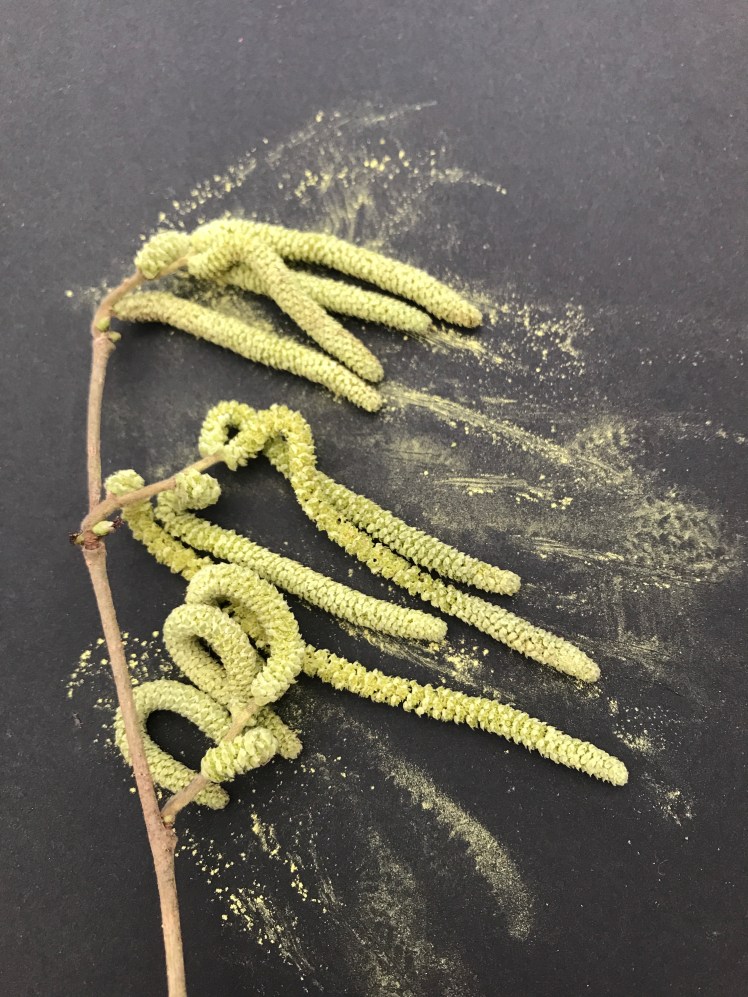
I have a small vase of hazel catkins in the kitchen , they look lovely but the surface around them was becoming yellow with a thick dusting of pollen.

I was curious just how much pollen there was so laid them over night on some black card.

As you can see there was plenty of pollen by the morning. Hazel is wind pollinated, however do bees collect the pollen for food if they are active but can only do so in small loads as the pollen grains are not sticky.

Under a light microscope the grains look like this :-

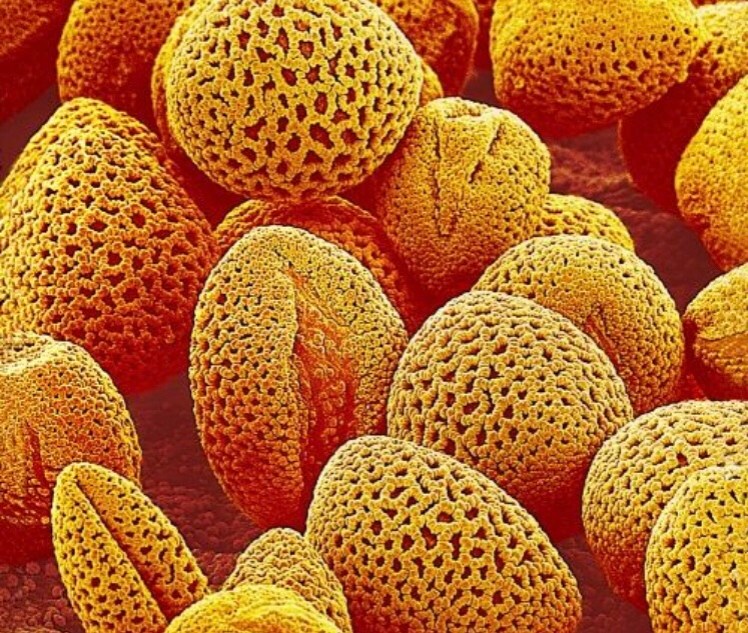
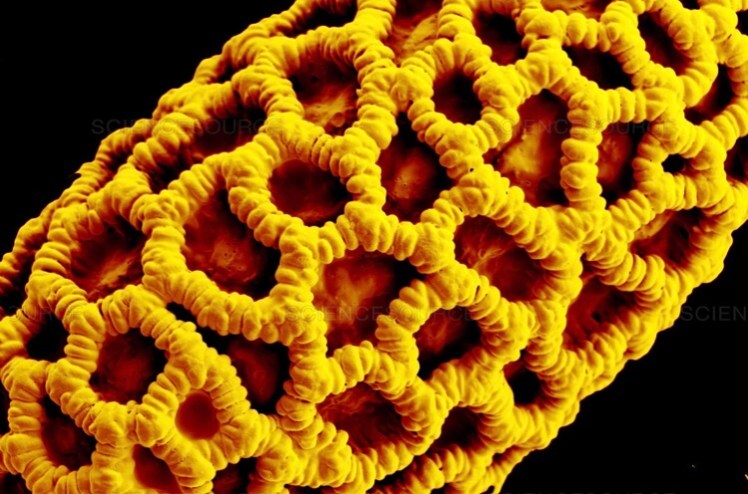
And through a scanning electron microscope :-

Pollen grains can be used to look at habitats historically , preparing soil samples can reveal plant histories from thousands of years ago.

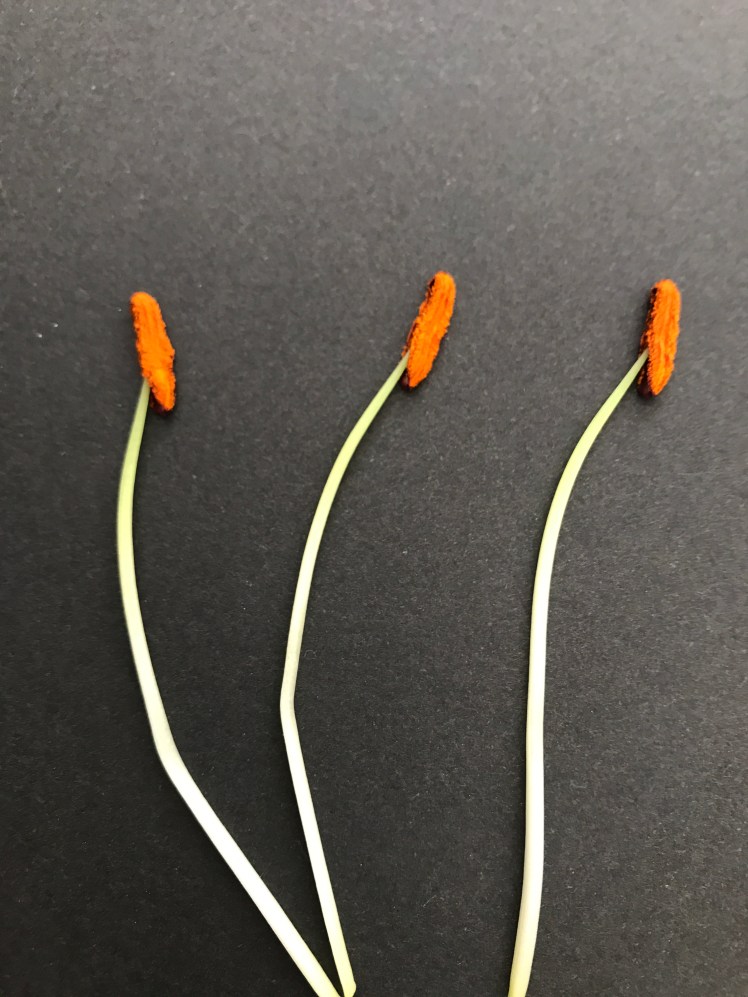
I bought a bunch of beautiful lilies reduced to £2.50,a bargain , they look lovely and smell gorgeous .They also have some stunning stamens heavy with orange pollen.

Plants look fantastic under the microscope , cutting through the anther on a lily reveals the pollen grain factory !

Pollen grains are all unique to plant species and this feature is usedin archeology , forensics and studies of climate.

The pollen of the lily is much different to the hazel .

An even higher magnification shows the amazing structure of the pollen grain wall.

Pollen can cause some people problems with hay fever symptoms but it is rather beautiful on closer inspection , a microscopic masterpiece.

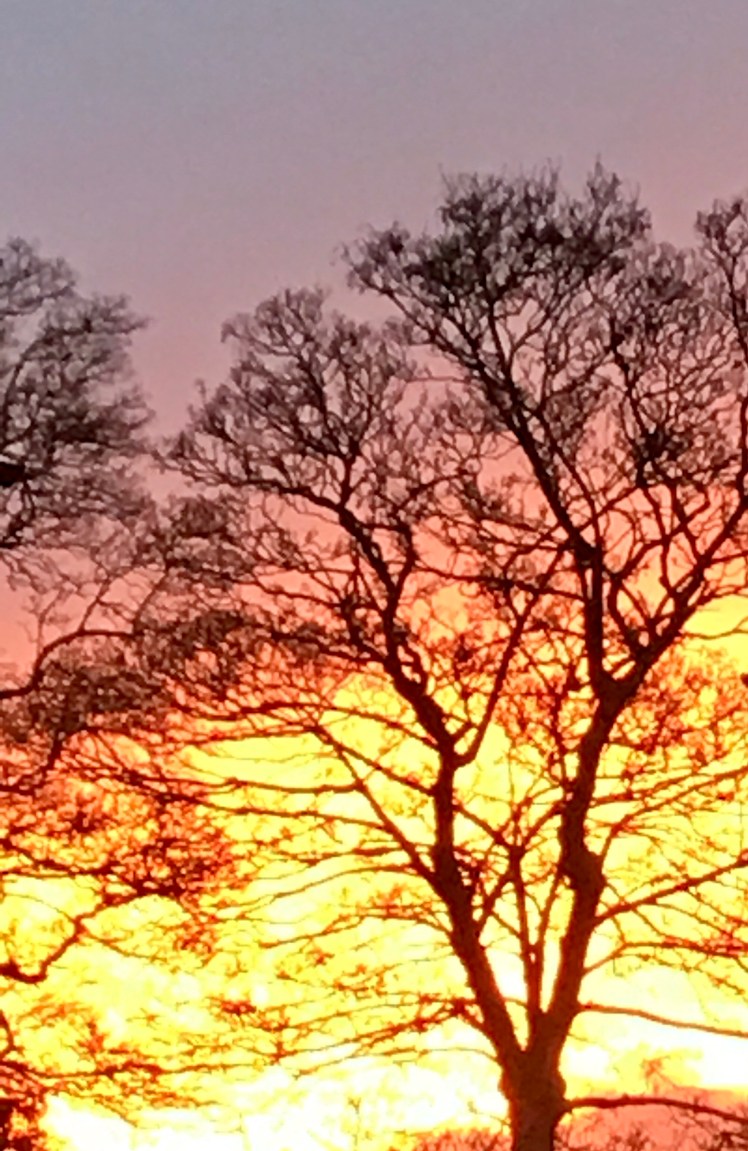
Painted skies

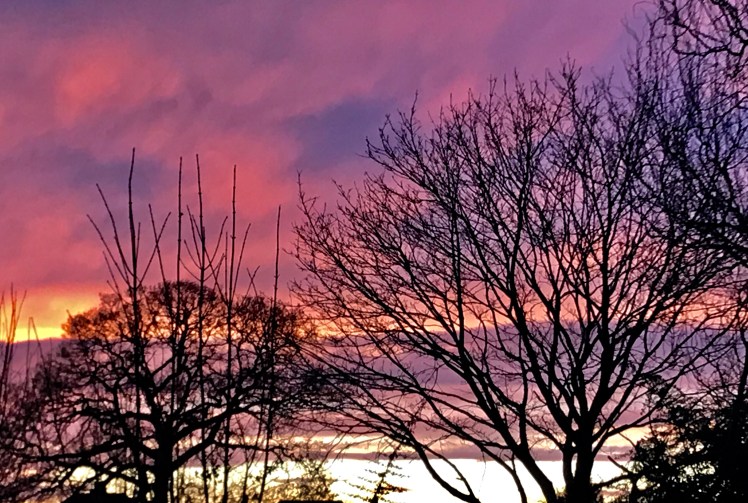
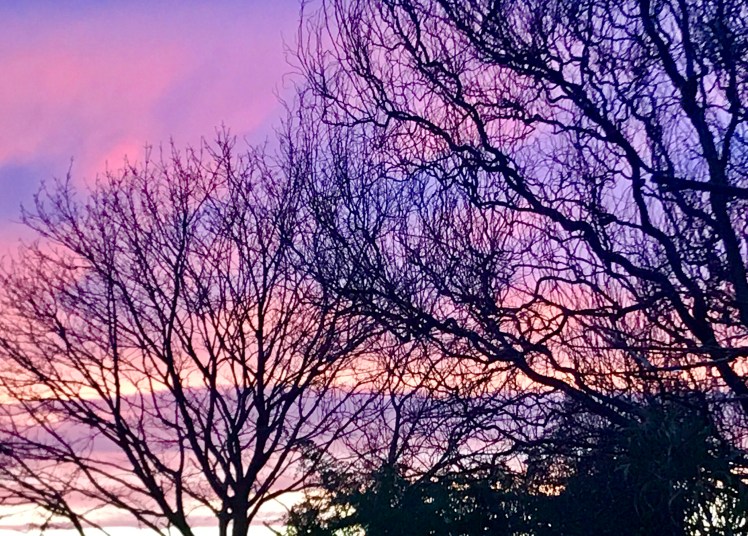
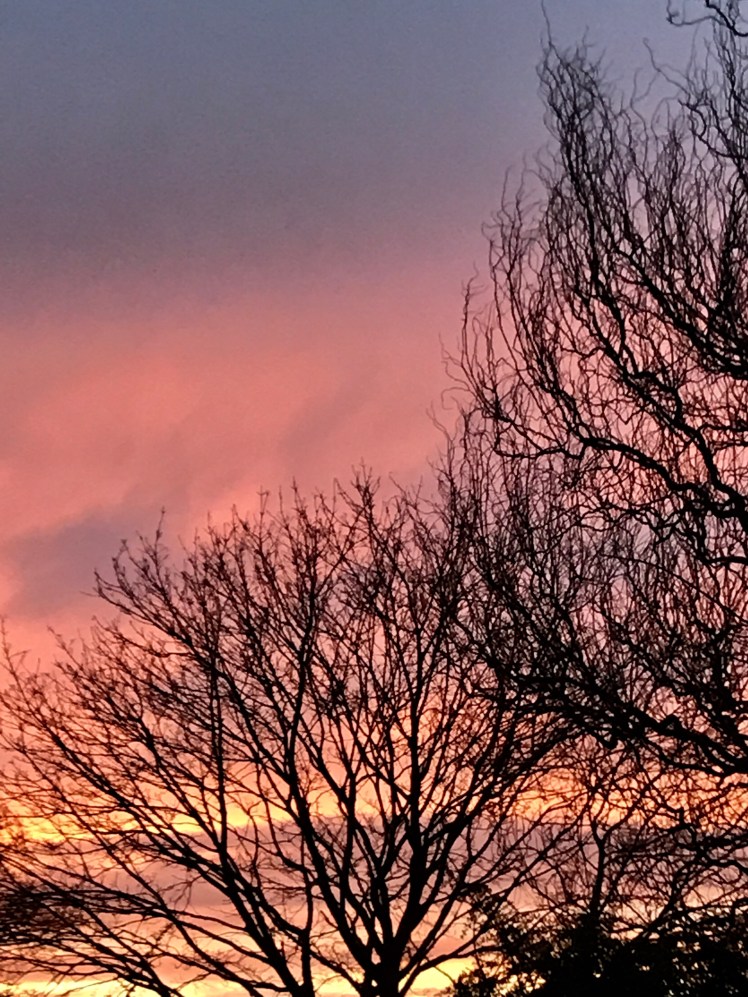
It has been raining and cold this afternoon with a real feeling of pending storm. The sky is full of brilliant colours so I thought I’d share them. The sky and trees look like paintings.

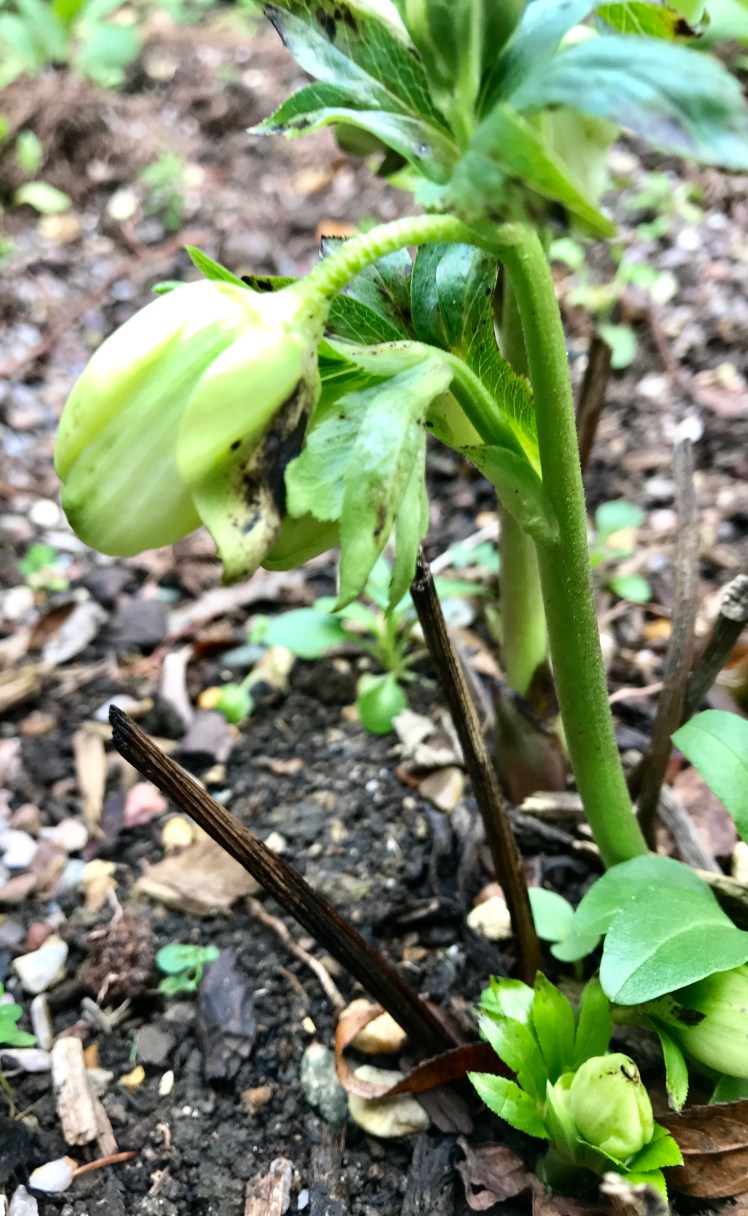
Here come the Hellebores

Curling out of the soil the Hellebore flowers are making a welcomed appearance.

These plants provide plenty of flower in this early part of the year in the garden. The seedlings are always interesting as you never know what colours might pop up.

They thrive in the gravel at the front of our house and we have a range of colours from white, green, pink and dark purple.

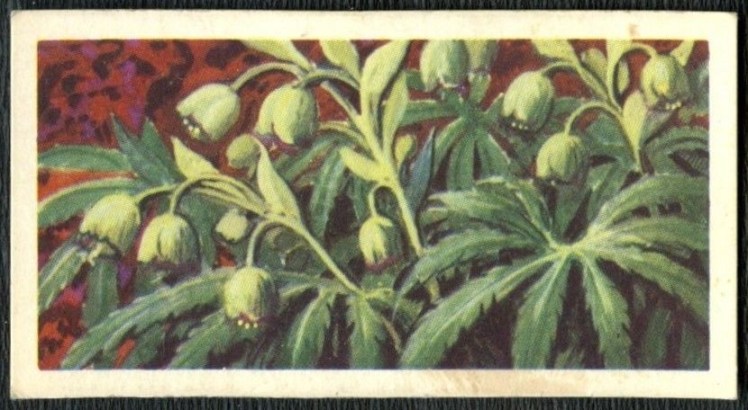
The Stinking Hellebore (Helleborous foetidus) is a native wild flower in Britain and blooms from Feb-April. It is also known as dungwort or bears foot and all parts of the plant are poisonous.

Stinking seems an unfair name as the flowers do not have an unpleasant smell. When the leaves are crushed they do have a beefy odour.

The flowers of stinking hellebore are more cup shaped than the flatter open flowers of the ones in my front garden.

The roots of the stinking hellebore contain alkaloids called nervine and verstridine that were used in ointments to treat neuralgia and rheumatoid pain.

Interesting Fact

Yeasts colonise the nectaries of the flowers, this raised the temperature of the flower which might then attract more pollinators. This is because it evaporates more organic compounds. This was the first species that this was discovered in.

Really lovely flowers , we are going back to Anglesey Abbey in a couple of weeks because there will be large areas of Hellebores to enjoy.

Alder Magic !

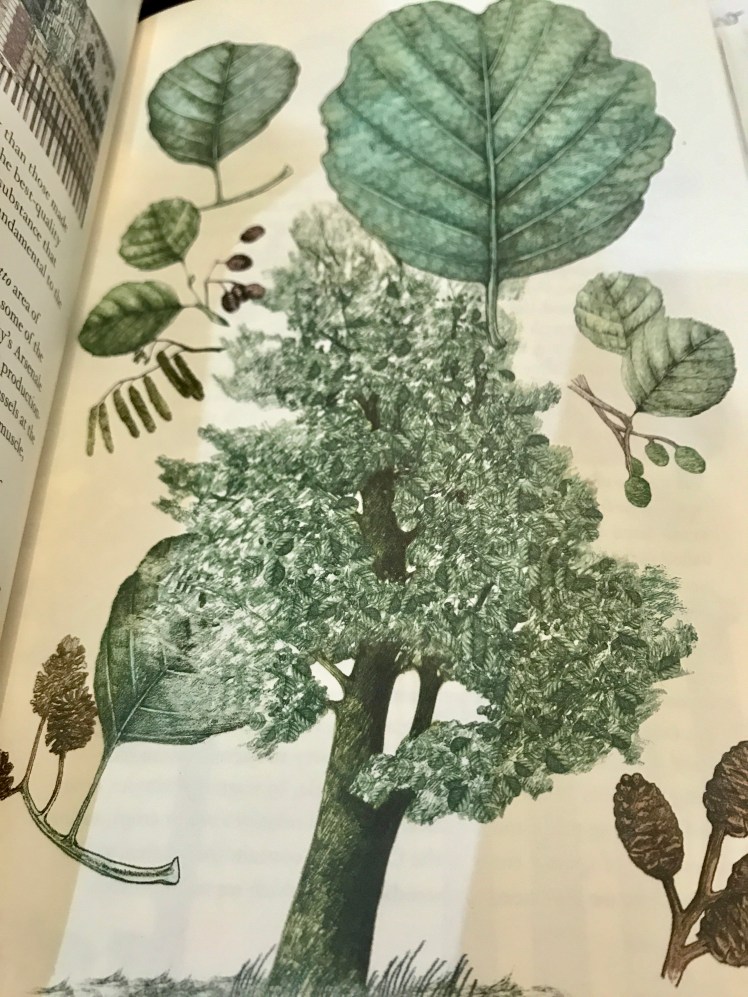
I had a fantastic book for Christmas from my sister , Around the World in 80 Trees. It is a lovely book with super information and lovely illustrations.

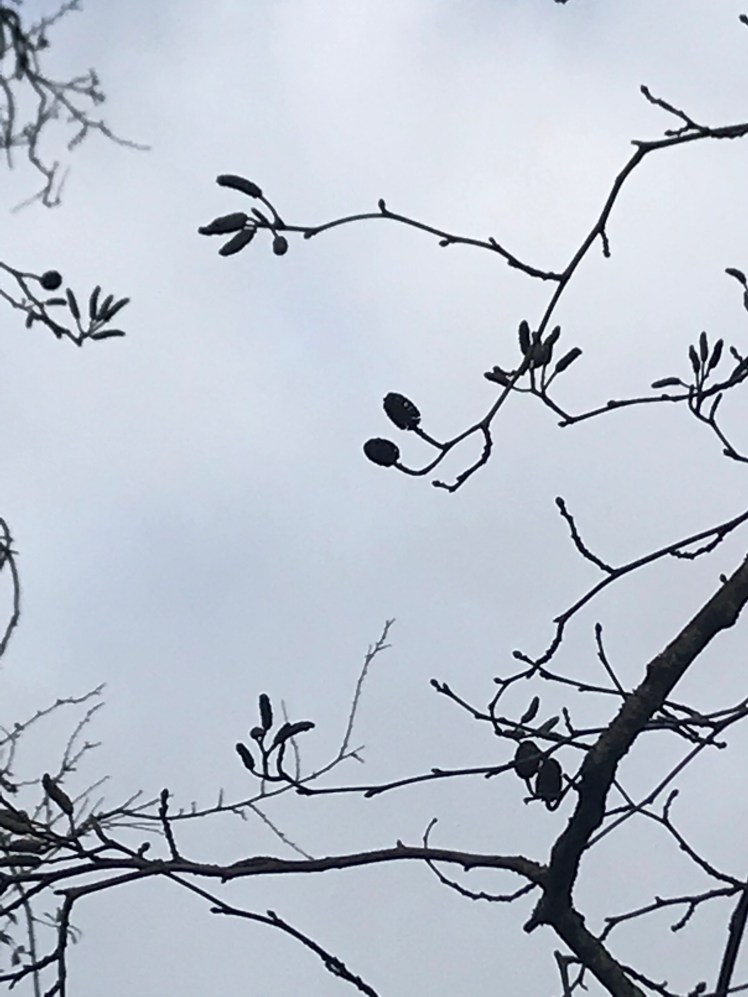
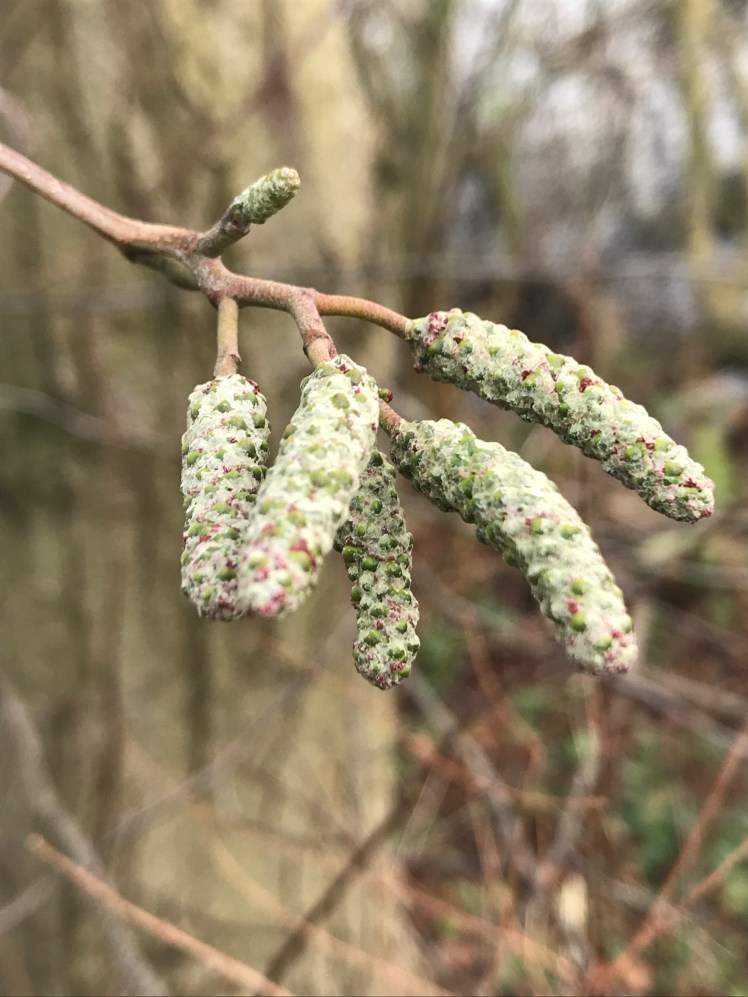
Today it came in very useful, I was thinking about the Alder trees I had noticed out walking today . The catkins were short and stocky , very tough compared to the hazel catkins I saw yesterday.

The Christmas book came up trumps with some great facts about Alders:

  • They love water, the ones I saw today were growing on the lake bank.
  • They have a symbiotic relationship with nitrogen fixing bacteria that live in modules which can be as big as apples in their roots.
  • These bacteria help the tree survive in often waterlogged and infertile soil.
  • Alder wood can survive in tack underwater for 100s of years, Venetians used alder piles as foundations for stone buildings.They are still there 700 years later.
  • Gunpowder made with Alder charcoal could shoot cannonballs further and faster.
  • Alder is monoecious, which means that both male and female flowers are found on the same tree.
    Male catkins are yellow and pendulous about 2-6cm long
    Fruits: once pollinated by wind, the female catkins gradually become woody and appear as tiny, cone-like fruits in winter.

These were on the tree in large numbers today.

These trees certainly have a story to tell and look fantastic all along the banks.

Light at the lake

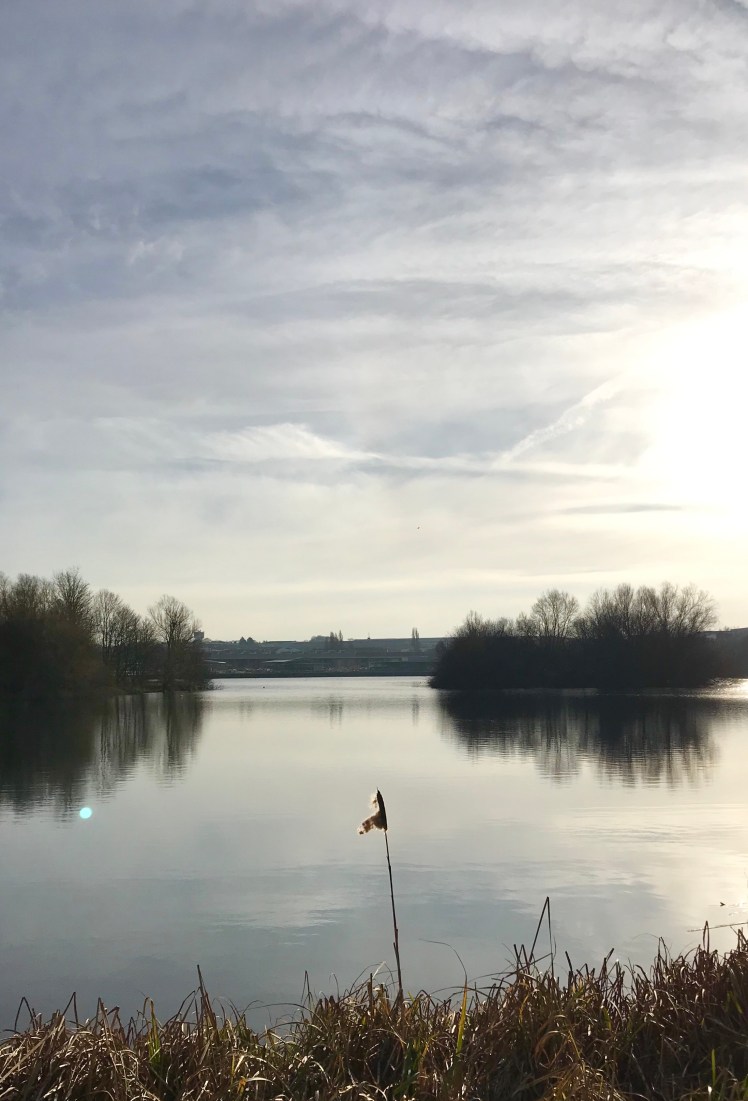
These reeds were looking fantastic in the light. The seeds still clinging on in the first photo. All gone in the wind on the next.

The walk around these lakes near home always have something interesting to see. Last year I signed up to the walk a thousand miles challenge and I have again this year but I’m setting a higher target 2019 miles!! I’ll be walking around the lakes a lot !!

Eyes in the Sky ( actually in the trees)

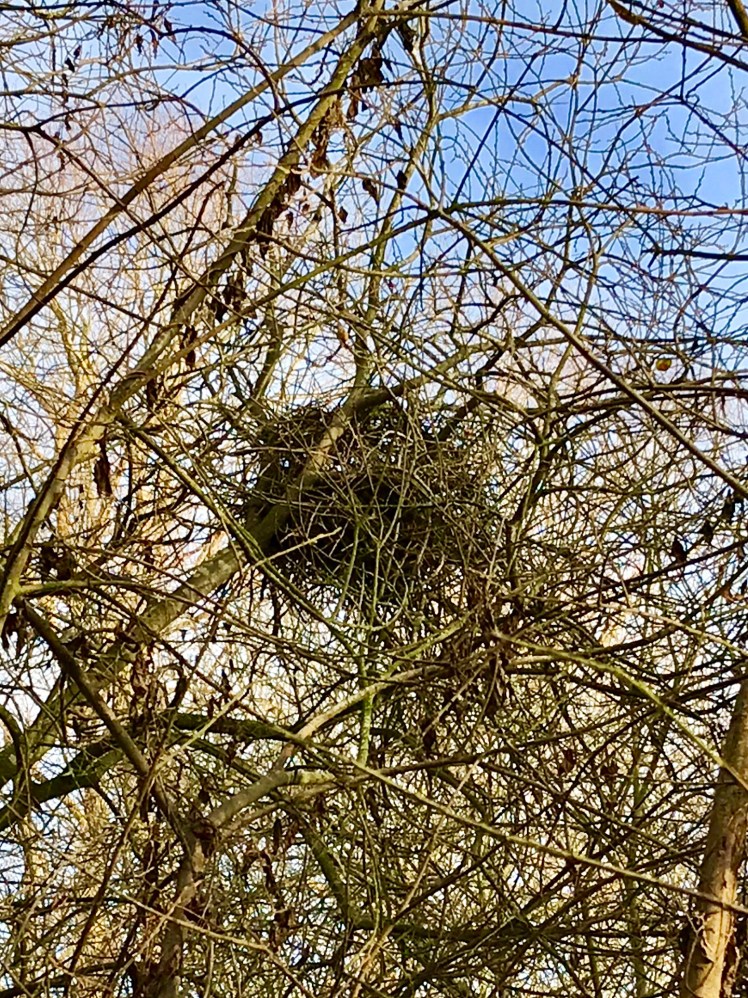
A brisk walk with Henry on a cool day became focussed on the bare branches of the trees . At this time of year it is great to see the branching patterns and shapes of the trees as well as the other stories that they tell.

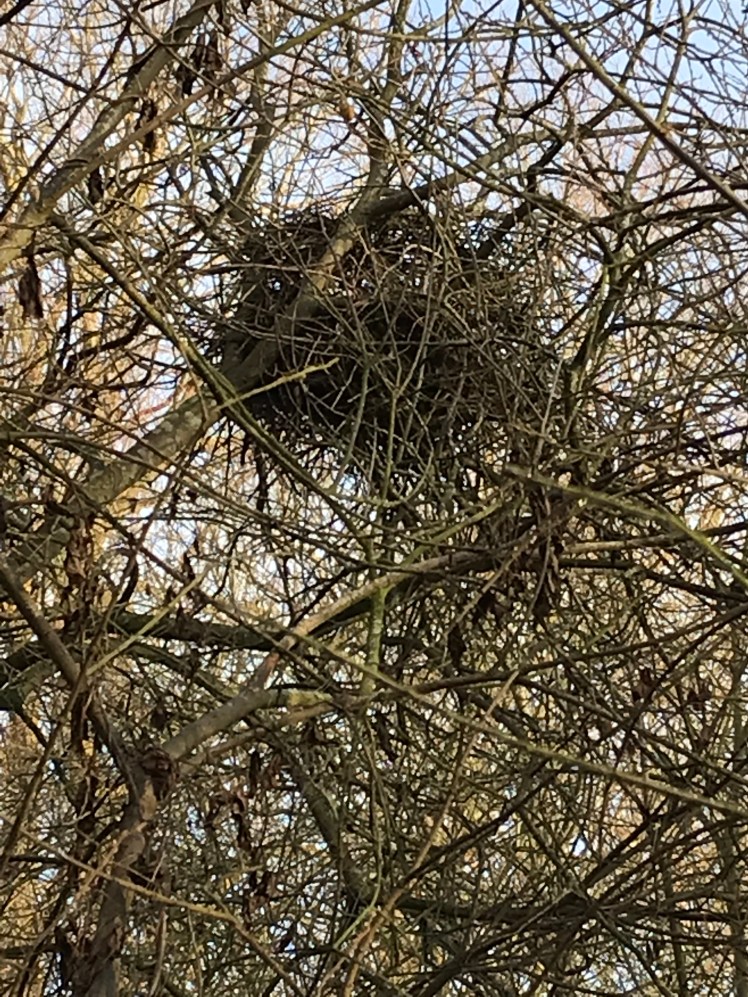
Birds nests from the past year are exposed, some of them carefully constructed or like this twig platform seem almost unfit for purpose.

Each year in the garden we have wood pigeons and collared doves nesting and their nests are just like this , each year they raise large chicks so it must be all they need !

Squirrel dreys are also on show and there are plenty of active squirrels, a few days ago while out walking one Olympic skilled squirrel literally leapt a huge gap to move between trees, very impressive.

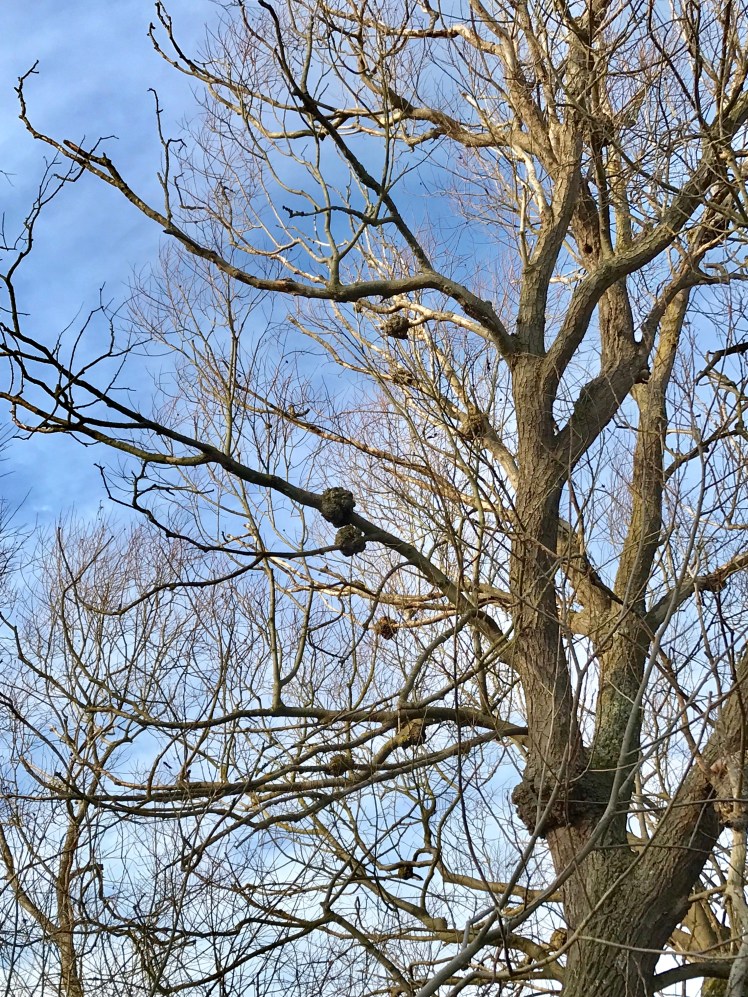
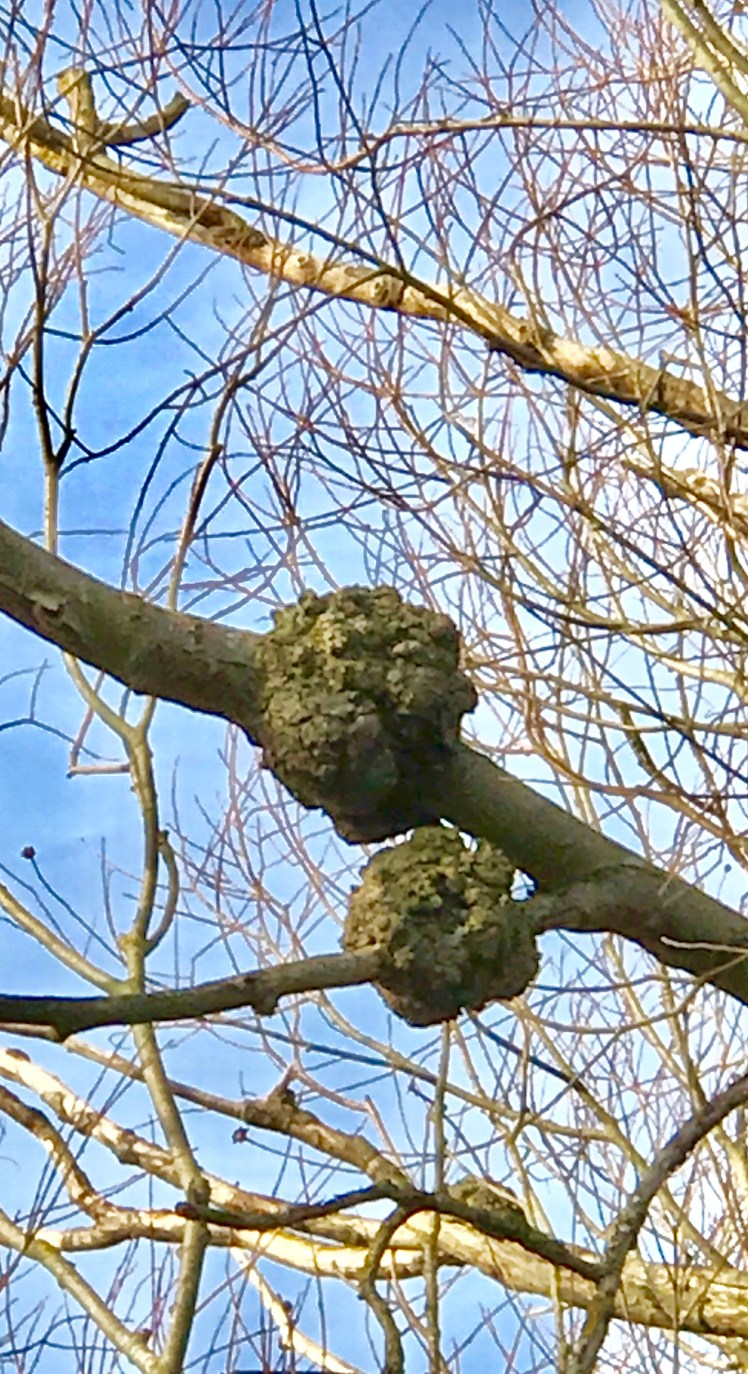
Other features of trees are apparent at the moment in this leafless month, signs of infection or fungal damage. This tree has cankerous growths giving it the appearance of swollen arthritic joints.

Some colour is appearing, hazel catkins are out in dense clusters. Long yellow tails brightening up January.

As I walked back to the car I walked through a beautiful smell, mahonia , lovely bright flowers and a heavenly scent.

January not to dull today, just need to be out looking.