Spring and no coat !

So great to be outside with no coat on this lovely spring morning.The sun was welcome and the birds were very loud! The geese give the impression that they need to honk louder and louder to be heard.

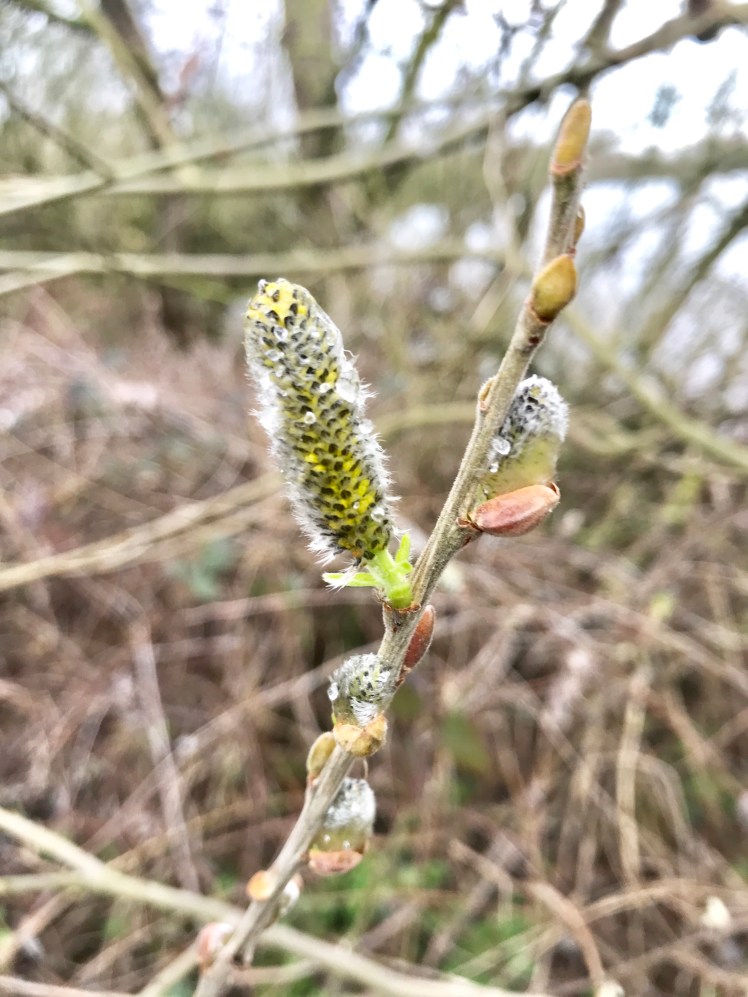
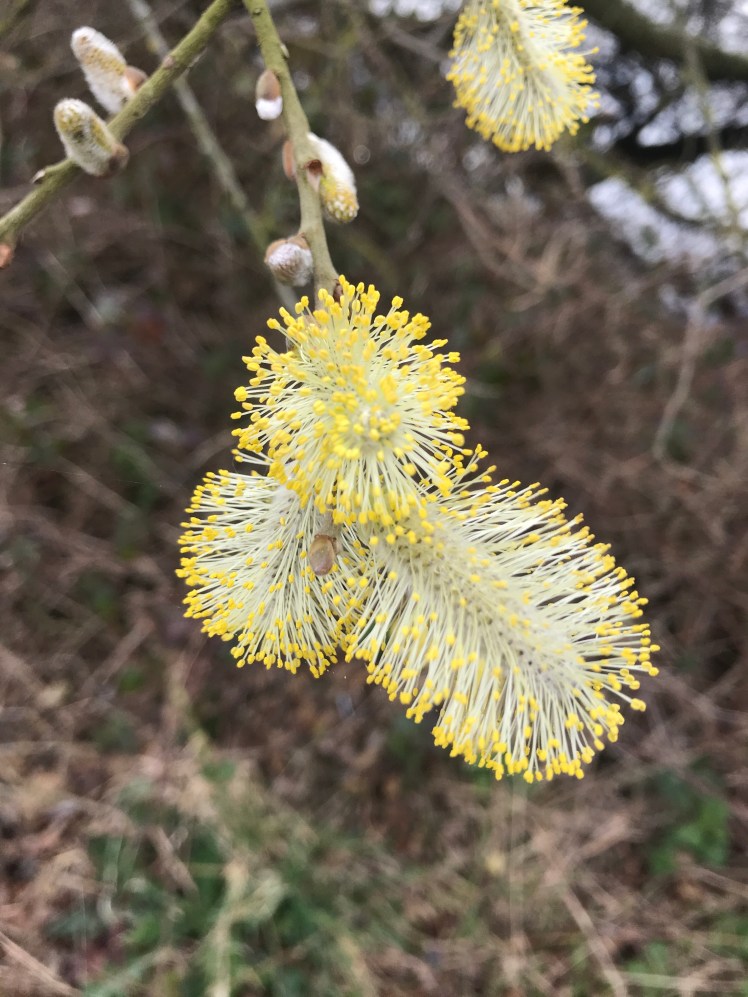
The willows are cascading green on the lake bank and the catkins are golden yellow.
Walking along a main path I caught a movement from the corner of my eye, a muntjac deer was foraging in the scrubby woodland.

This is only a tiny video clip but it also shows the days soundtrack, so many birds!

This walk was full of interest , I saw my first Brimstone butterfly of the year, I usually write this yearly marker in my diary. The Brimstone was obvious from a long way off against the bare branches looking like a flapping yellow bird.
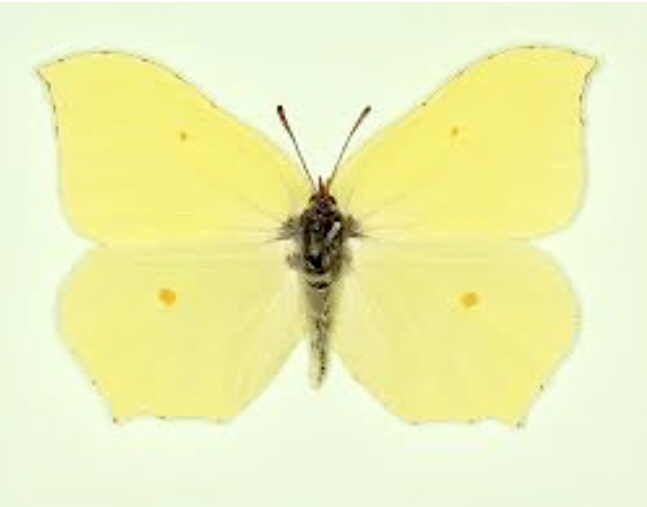
Brimstone (Gonepteryx rhamni) hibernates through the cold weather and can seen again on warm days.it is thought that the yellow colour of the brimstone’s wings inspired the term ‘butterfly’.

The larvae feed on Buckthorn and Alder Buckthorn. They are most common in hedgerows, open woods and scrubby land.They lay single eggs on the underside of leaves which hatch in 10 days. The caterpillars are green and lay along side the midrib of the leaf. These caterpillars are heavily predated by birds such as blue tits. The remaining caterpillars change into Green chrysalis which are very well camouflaged. The adults emerge after 10-14 days.

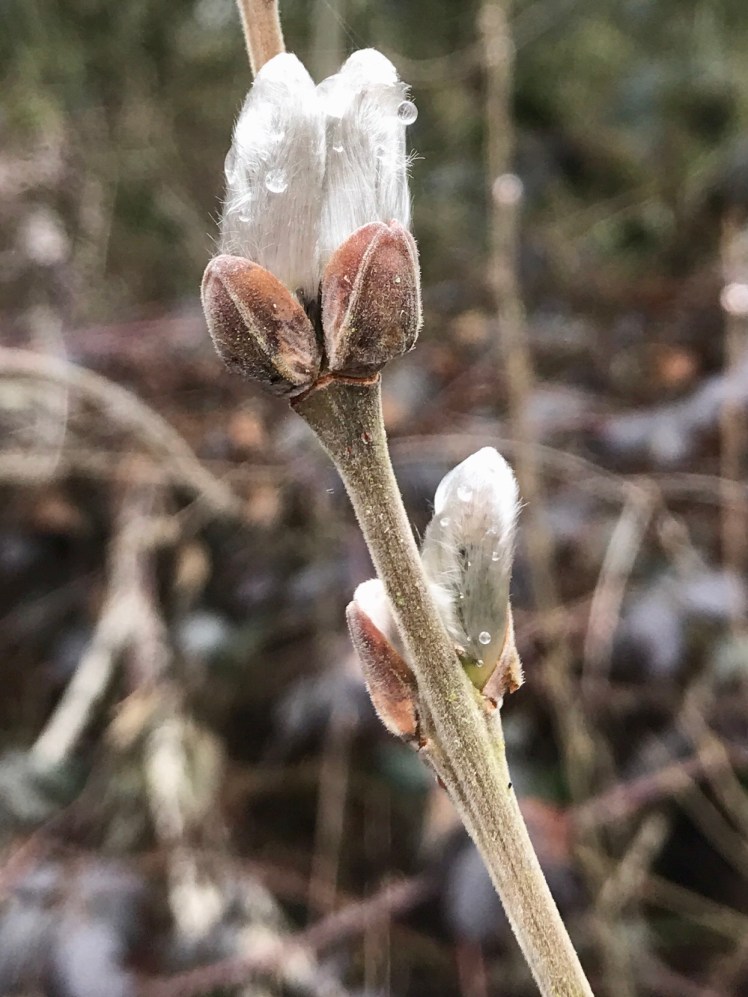
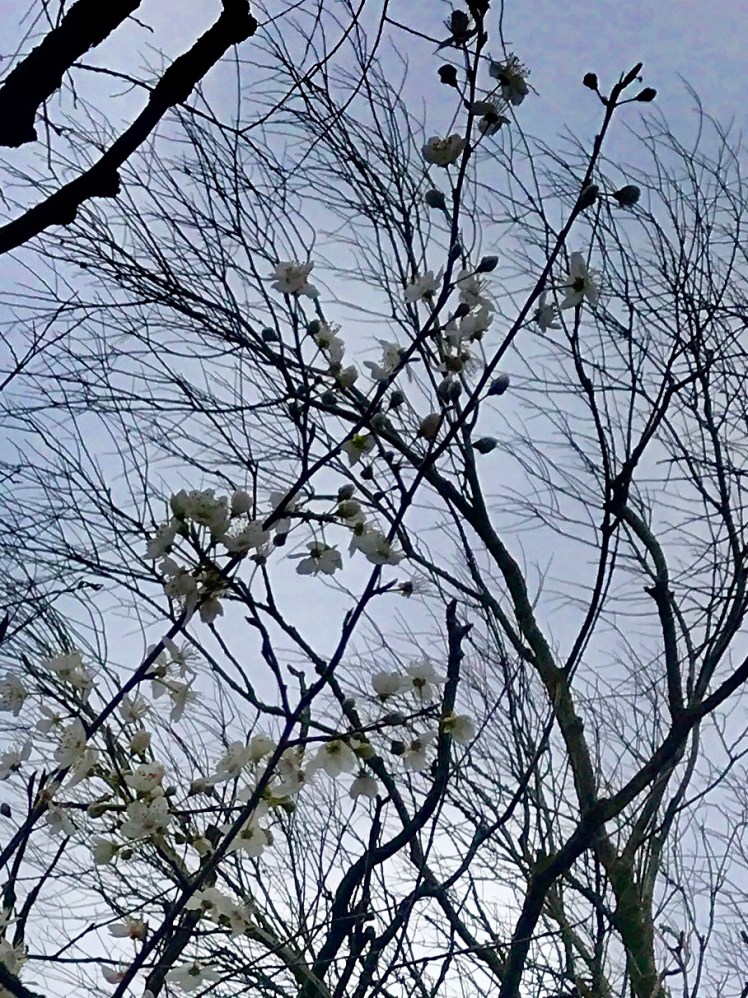
The trees continue to burst their buds.

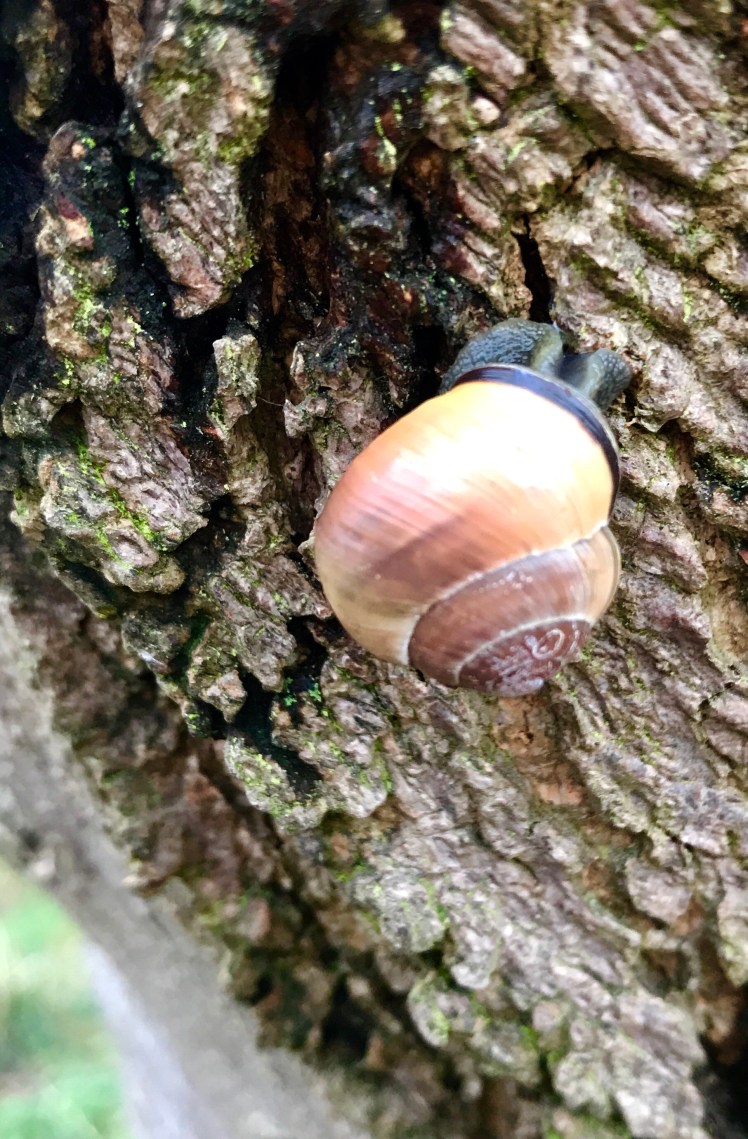
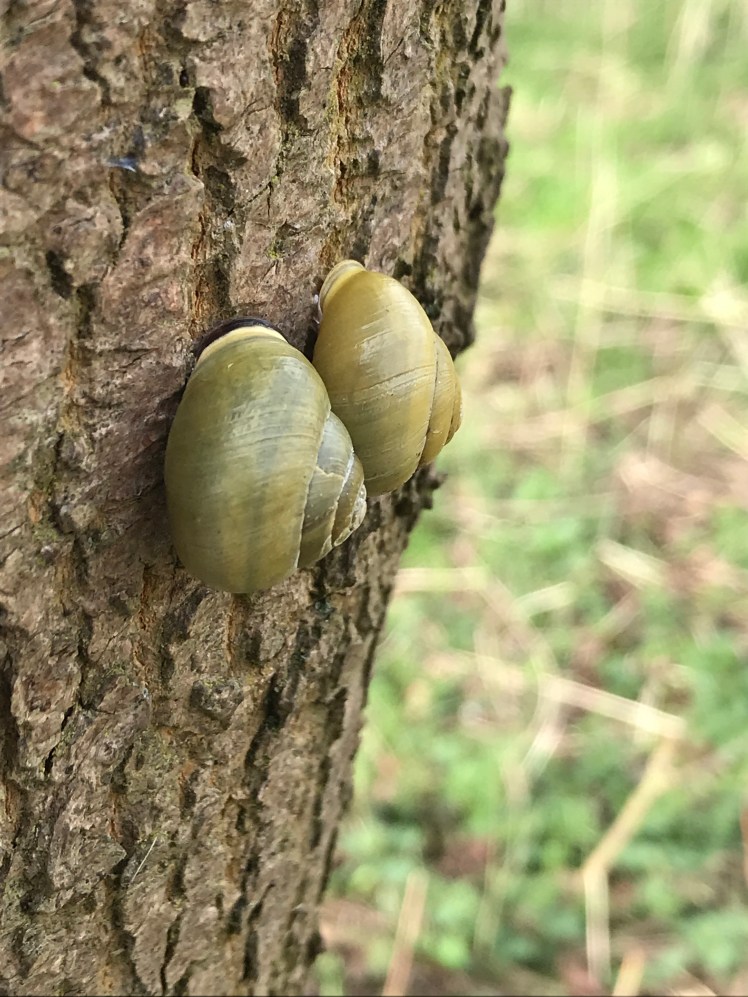
Up the trunks of these trees my favourite snails (banded) are climbing again!
All along this walk the birds were singing and flitting constantly from tree to tree, groups of long tailed tits, blue tits , great tits and many more. No sign of the great spotted woodpeckers today but evidence of there work on the trees and they were drumming loudly.

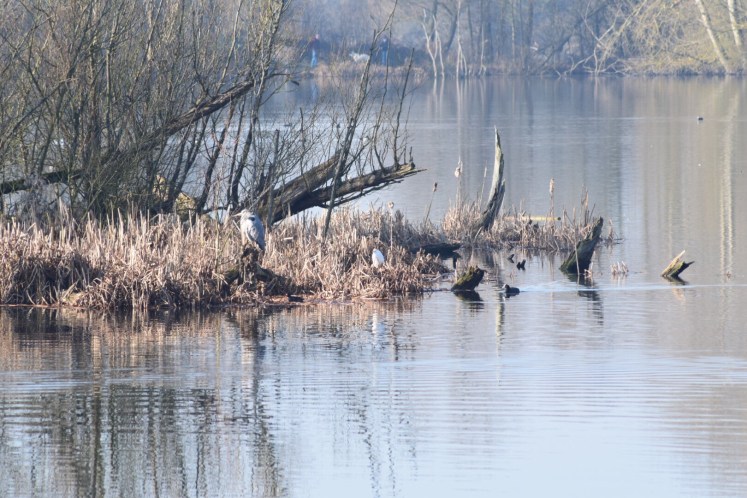
I walked quietly to the edge of a small lake to watch this Heron.

This walk was full of energy and activity , big bumble bees were moving through the grass and there were insects flying.Flowers are blooming, colour is returning .

A fantastic spring walk.

Bathing in the rain

It might not be our favourite weather but these amphibians are having a perfect night !!

This video was sent by nature table explorer Reccy of the pond in the garden . They have had a lot of other toad activity in the pond , keeping a look out for spawn.

In the meantime it’s rain bathing time !

Out and about with the daffodils.

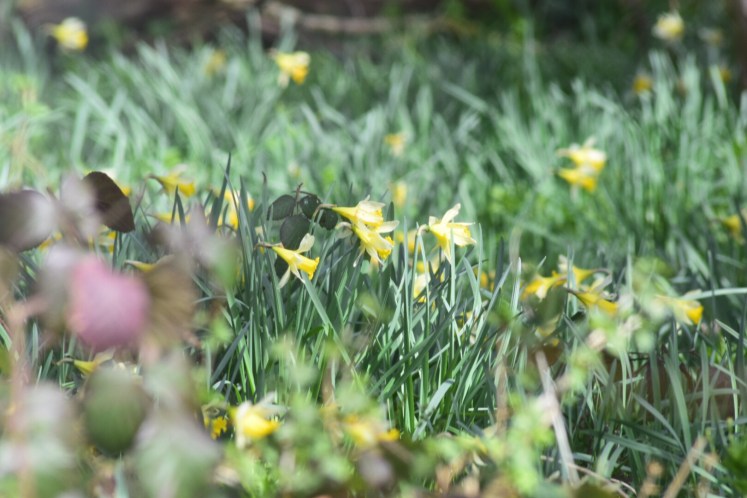
Returning to Dymock yesterday to wander in the daffodils was windy but very pretty.

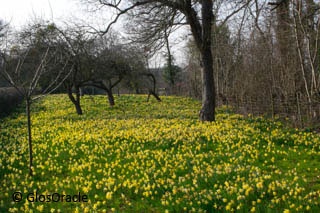
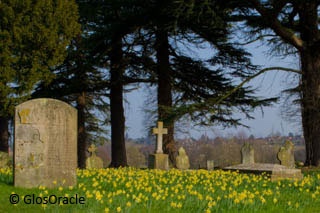
The daffodils are through fields, on the verges but for me they are their most beautiful are those carpeting the woods.

The soil in this area is a wonderful deep red as are the stone houses. It was a very colourful morning.

Interestingly the seeds produced by wild daffodils take five to seven years to develop into a plant that will again flower.

Other early spring flowers are beginning to make a show , on this short trip we found wood anemone, just starting to come out into flower. Dogs mercury, primroses and speedwell. This is a fantastic time of year as the woods and verges start to flower .

These daffodils are a wonderful start to the wildflower year .

Dancing Daffodils

When all at once I saw a crowd, A host of golden daffodils

William Wordsworth, “I Wandered Lonely As A Cloud”

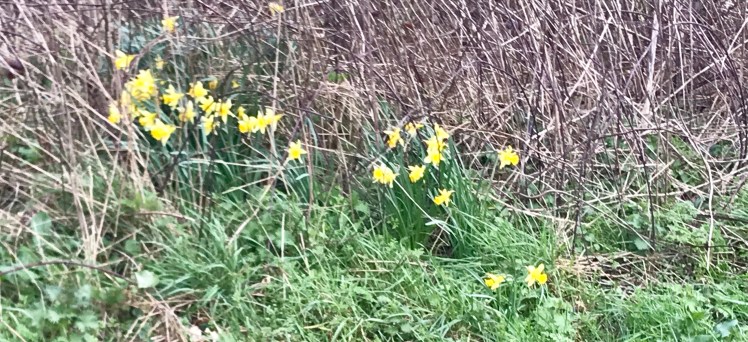
A wonderful sight travelling to the Forest of Dean, wild daffodils dancing in the breeze. These amazing little flowers were carpeting woods, edging fields and running and spilling along lanes. They are gorgeous.

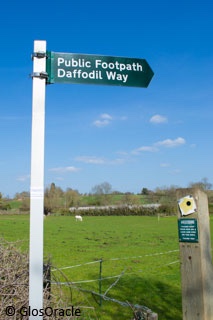
This area of Gloucestershire is famous for its daffodils.

Around the village of Dymock there are daffodils weekends through the woods, this sounds wonderful.

This extract is from the Dymock poets website;

The area between May Hill and the Malvern Hills is most famous for its wild daffodils, which once grew in profusion in the meadows and woods. Despite changes in farming practices there are still many places where wild daffodils can be seen in late March and early April. The villages of Dymockin Herefordshire and Kempley in Gloucestershire organise guided walks and other events on their ‘daffodil weekends’.

The wild daffodil,Narcissus pseudonarcissus, was once a common sight in England, but intensive agricultural practices and use of chemicals has led to them becoming less common.

The area around Dymock was known as the golden triangle because there were so many daffodils.The Golden Triangle used to be a commercial centre for daffodils which were picked by local people, including school children, and sent to London by train to be sold at the major flower markets and delivered to hospitals. These pickers were immortalised by the Ledbury poet John Masefield:

And there the pickers come, picking for town
Those dancing daffodils; all day they pick;
Hard-featured women, weather-beaten brown,
Or swarthy-red, the colour of old brick.

In the 1930s special trains bought people to see the daffodils, after the war the changes in agriculture caused the decline of the daffodils in meadows however with conservation work the daffodil is flourishing.

Here are some photos from the Gloucestershire website , I am returning to this area this week for some exploring in the wonderful woods. Watch this space !!

A little more about the wild daffodil –

it is commonly known as the ‘Lent Lily’ for its long association with Easter celebrations, the Wild Daffodil got its Latin name, Narcissus, from an Ancient Greek myth. Narcissus fell in love with his own reflection in a pool of water, becoming so obsessed that he fell in and drowned. The nodding head of the Wild Daffodil embodies Narcissus bending over the water and it’s said that the first flower sprang from where he died.

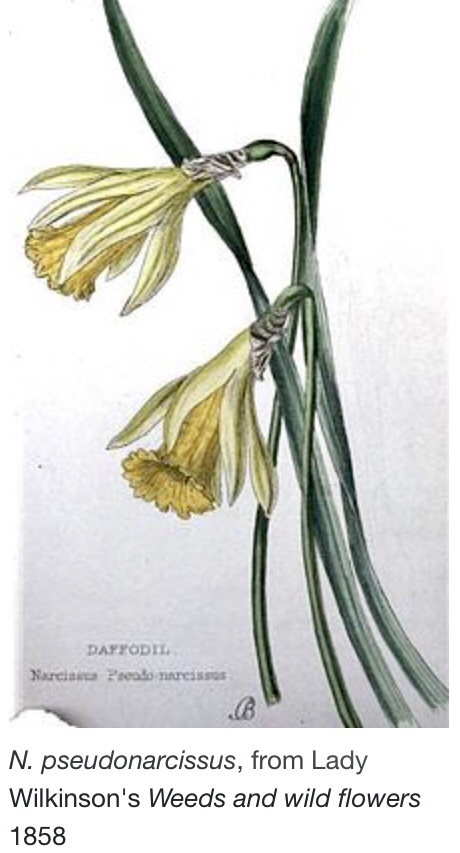
The flower structure:-

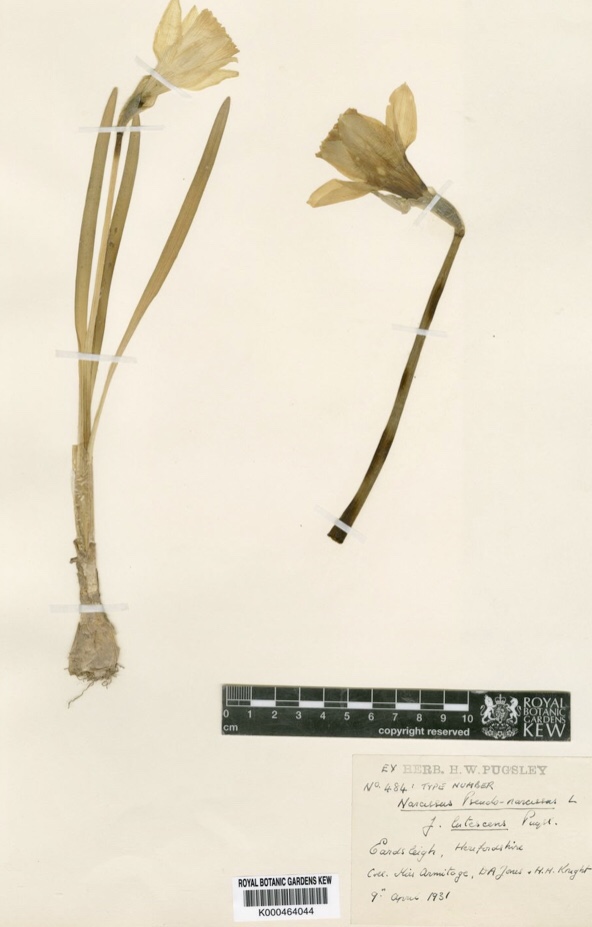
Here is a herbarium specimen from Herefordshire collected in 1931 , the time of the daffodil special trains .

Looking forward to Thursday and walking in these woods !!

Buds are bursting

It has been a few days of weather that encourages you to stay in. Today I braved a walk, which was damp and windy but not without some spring joy.

Buds are swelling and bursting open . The weeping willow trees have turned a green colour all over. There is a green upswell from the ground under the old brown growth of last year.

As I was walking round I was thinking that I hadn’t seen any snails recently and then almost immediately I spotted one up a tree!

The swans were busy as usual, the injured swan with the damaged wing has survived the winter and is happily swimming about.

Last years helicopter seeds from the field maples are sprouting in carpets under their parents.

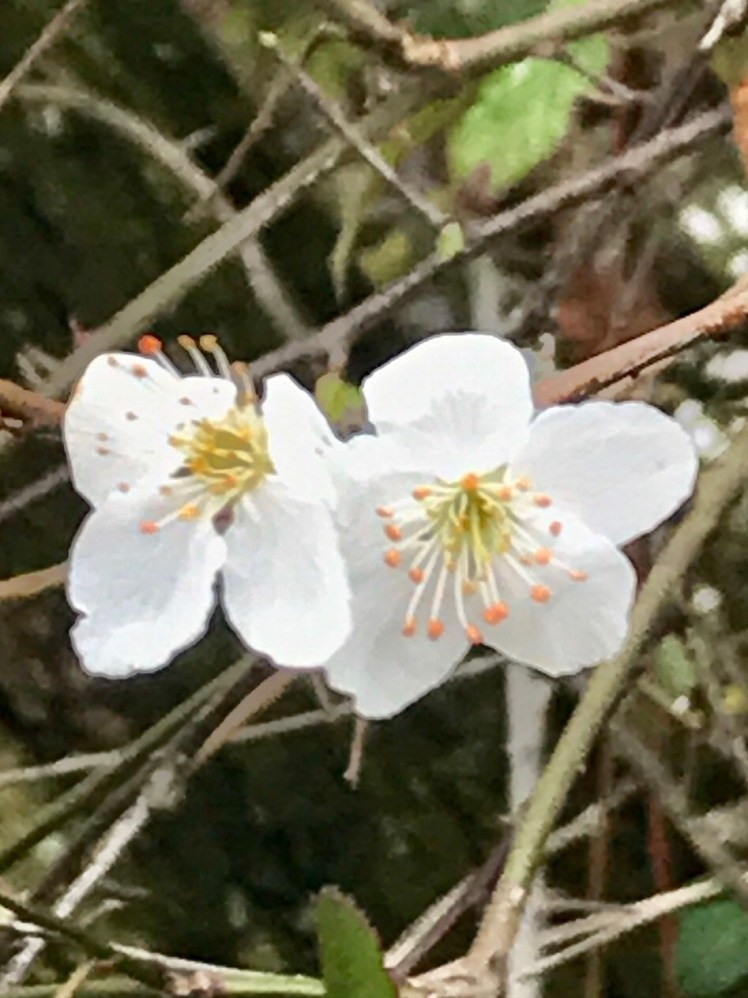
Blossom is really starting to decorate trees , even on this rather grey walk.

As I was walking today I noticed:-

  • The wonderful sound of the swans wings as it flew low over the lake.
  • The slightly comical walk of a moorhen as it walked quickly and then swam off into the lake.
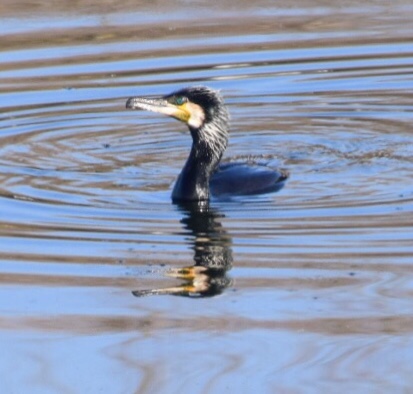
  • Diving cormorants
  • Herons busy on their nests.
  • Great tits eating amongst the blossom.
  • Elder and bramble leaves nearly out .
  • Coots eating around the edge off the lake.
  • Tufted duck in groups.
  • Blackbirds running and posing through the undergrowth.
  • Terns paddling
  • These Terns are on the first lake and have a floating nesting platform. I noticed that when they move across the water their feet are going very fast almost doggy paddle for birds !
  • The Lichens added colour to this rather dull day. There is a feeling of spring and green on the way as the buds and leaves are bursting forth.
  • A stroll through the church yard at Higham Ferrers was brightened up with some lovely primroses. Looking forward to plenty of primroses this weekend in the Forest of Dean.
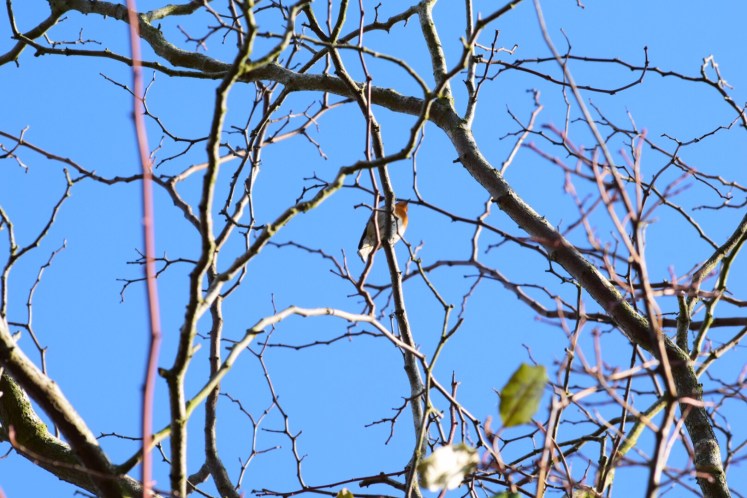
  • Robin-Soundtrack to the day.

    One of the best parts of this beginning of better weather is that the soundtrack of the outdoors changes. It is full of chattering and singing birds.

    The Robin , who continues to sing through the winter has definitely upped his game and is a star of this new soundscape.

    We are lucky that the tall tree at the corner of the garden seems to be a favourite singing spot for the Robin. This joyful and varied song lifts our mood and spirits without fail.

    The Robin (Erithacus rebecula) is a member of the bird family old world flycatchers and chats.

    Male and female Robins look identical , young birds have no red breast. They may be pretty birds but they are aggressively territorial. female birds are allowed into male territory at breeding time.They eat worms, insects, invertebrates , seeds and fruits.

    Robins build nests in some unusual places , old pots, boots, even peg bags. They lay 5-7 eggs and the chicks are fed by both parents.

    Here are some more robin facts.

    • Robins sometimes sing at night in urban areas, confused by the street lights.
    • They weigh 16-22g
    • Pairs of Robins can have 3-5 broods of chicks a year.
    • Three quarters of Robins in Britain die before they are one year old due to predation.
    • About 10 percent of older Robins die in territorial disputes.
    • The first record of a Robin taking good from a human is from the 6th century.
    • They are one of the first birds to sing in the morning and one of the last to stop at night.
    • British Robins are friendly with humans and associate often with Gardeners especially when digging and worms are on offer.
    • Continental Robins are more shy, this may be because of a history of hunting.
  • This afternoon I have been re-edging the lawn and turning the soil and sure enough the Robin appeared hopping along behind me feasting on worms.
  • Finding Fish- The experts

    A walk at the lake , still no fish to be seen . The expert fishers were happily finding plenty of them.

    Cormorants were almost sliding into the water , diving down to find the fish.

    The Heron sitting high on the trees was flying off, catching a fish and feeding it to its chick. It had a quick turnaround…Fishing to order .

    These photos needs some imagination , there is a heron, a chick and a heron flying. This is another time I would love a bigger lens.

    Sitting in the next tree was a little Egret looking out for fish.

    Walking around to the next lake , closer to the shore than normal another pair of fish eaters, the elegant Great Crested Grebes.

    These birds were killed almost to disappearance in the UK for their head plumes !

    The sun was out and the birds were very active, and in the case of the Canada geese very noisy.

    The very large lake had a super group sitting in prime fishing position, a Heron and an Egret.

    These two were later joined by a passing swan, which the ignored!

    All this fishing going on , around the lakes the birds were busy in the trees too, blue tits, great tits and long tailed tits flitting from tree to tree. Robins seemed to pop out of every area of scrub or undergrowth happily sitting and singing. A flash of red high up in the trees caught our eyes. A pair of Great Spotted woodpeckers . They were busy in the tree for ages, not fishing but eating in the sun .? A real treat to see.

    Sand and birds

    Sun and blue sky for a visit to the headquarters of the RSPB in Sandy , Bedfordshire.

    This is a fantastic place for a walk through sandy heathland. There are fantastic woodlands and outcrops of rocks and even an Iron Age hill fort.

    There are lots of species to discover here, breeding hobbies, ravens, common lizards and green tiger beetles.

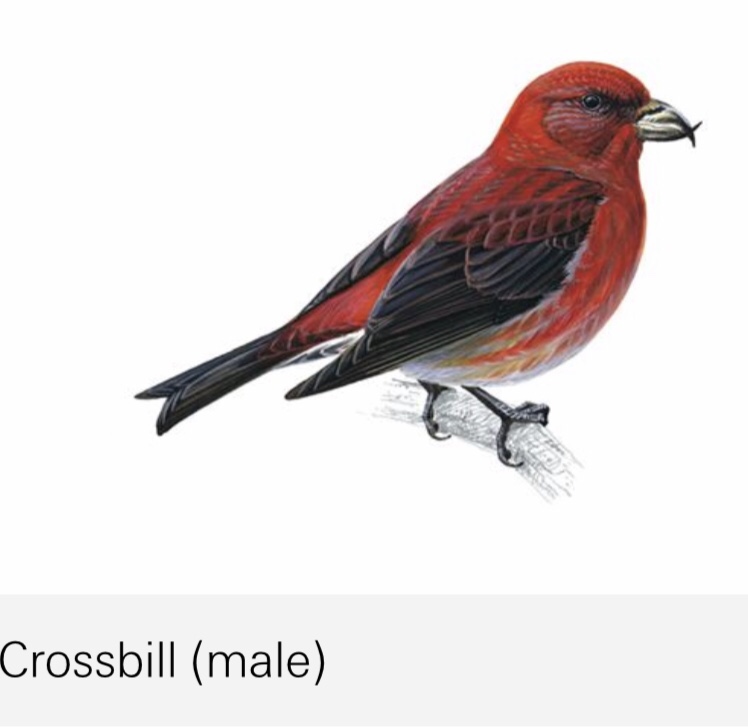
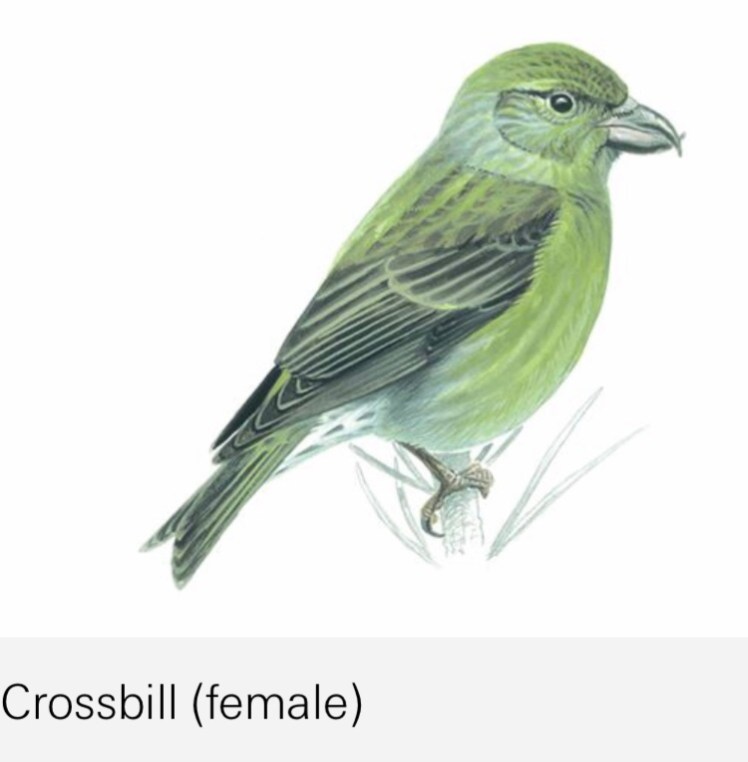
    On this visit people were on the look out for crossbills, unfortunately we didn’t spot any.

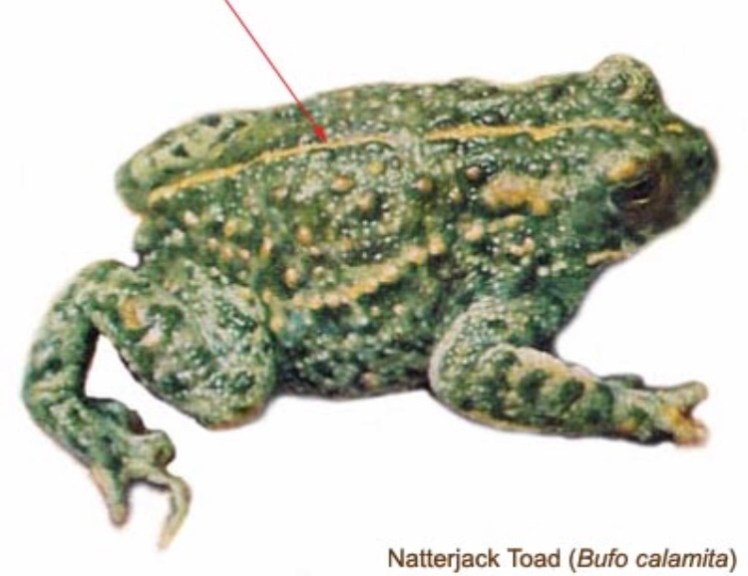
    It is also one of the best inland sites for natterjack toads.

    The Iron Age Hill fort is called Galley hill and is a large flat topped hill which would have had fantastic views over the surrounding areas. The Pine trees are very tall and straight and the paths are loose sand.

    Nature table explorers Tim and John scouted ahead , there are 220 hectares to explore, it is the largest area of heathland in Bedfordshire.

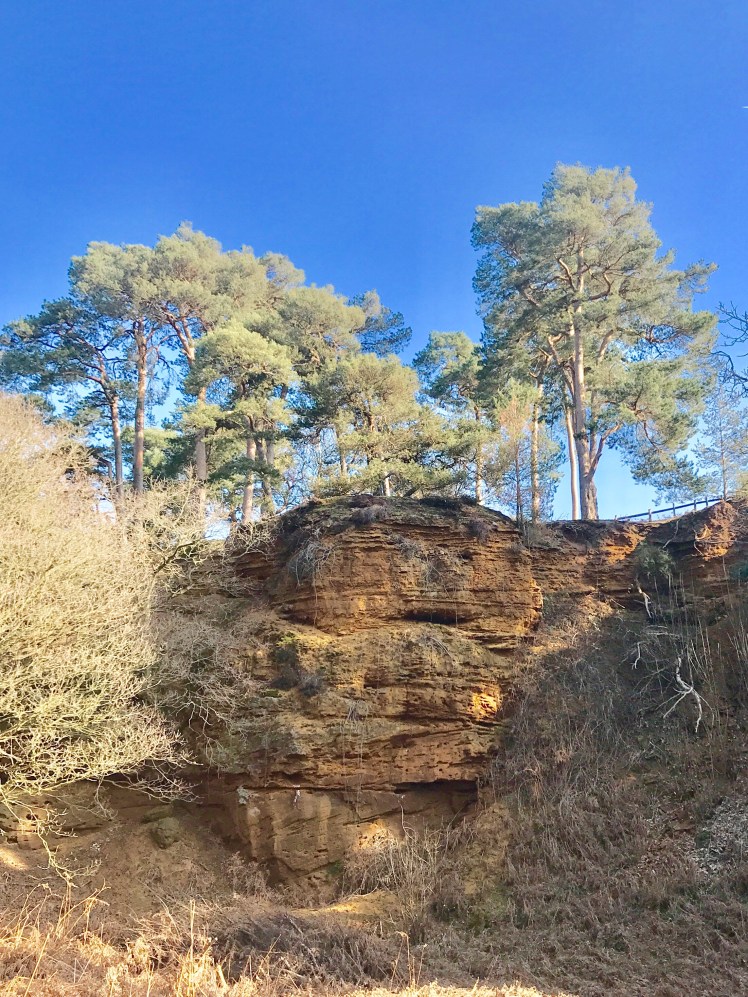
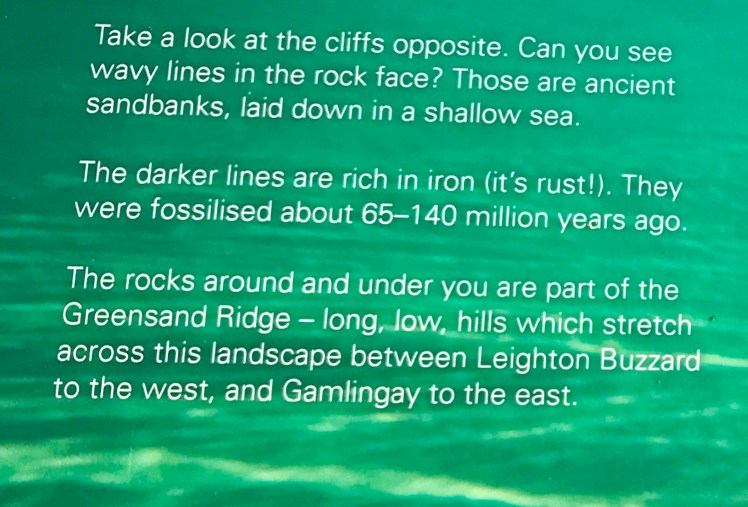
    My favourite area is the exposure of the Greensand,these rocks outcrop on the Nuthatch trail as you walk round.

    These rocks were laid down in the Lower Cretaceous . There are some good boards to explain more.

    This is a great place to visit, parking is free if you are an RSPB member or £6 if not. There is a place for coffee, a shop with great books , binoculars and bird food. They have feeders set up to sit and watch and there are bird hides. A good day out .

    The address is

    The Lodge nature reserve

    Potton Road

    Sandy

    SG192DL

    Grid ref- TL191485

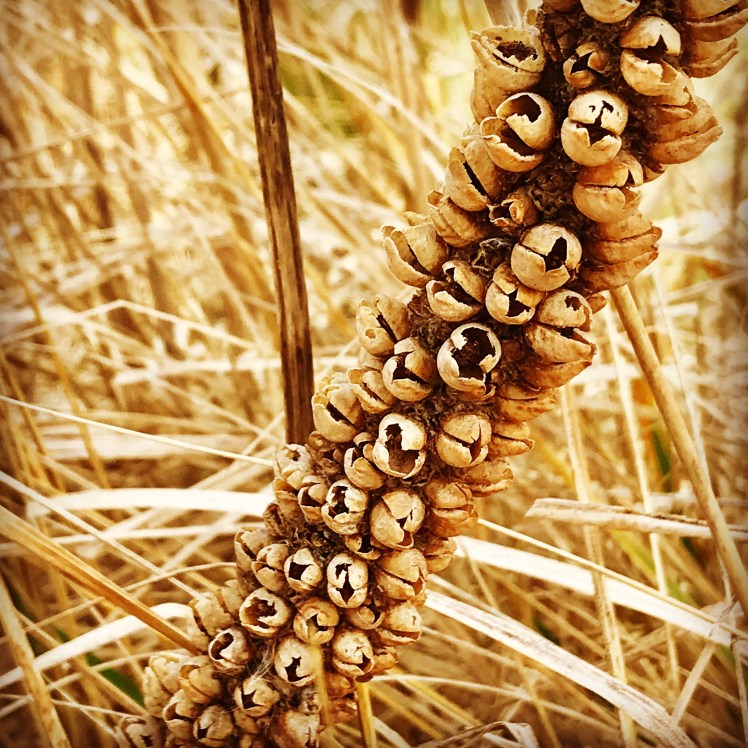
    We will be going back as the trees and flowers come into leaf and flower. The seed heads were gorgeous so looking forward to this years flowers.

    Stories in Stone

    I have been out and about over the last week not just in the woods and beaches but also in some wonderful cities with beautiful buildings.

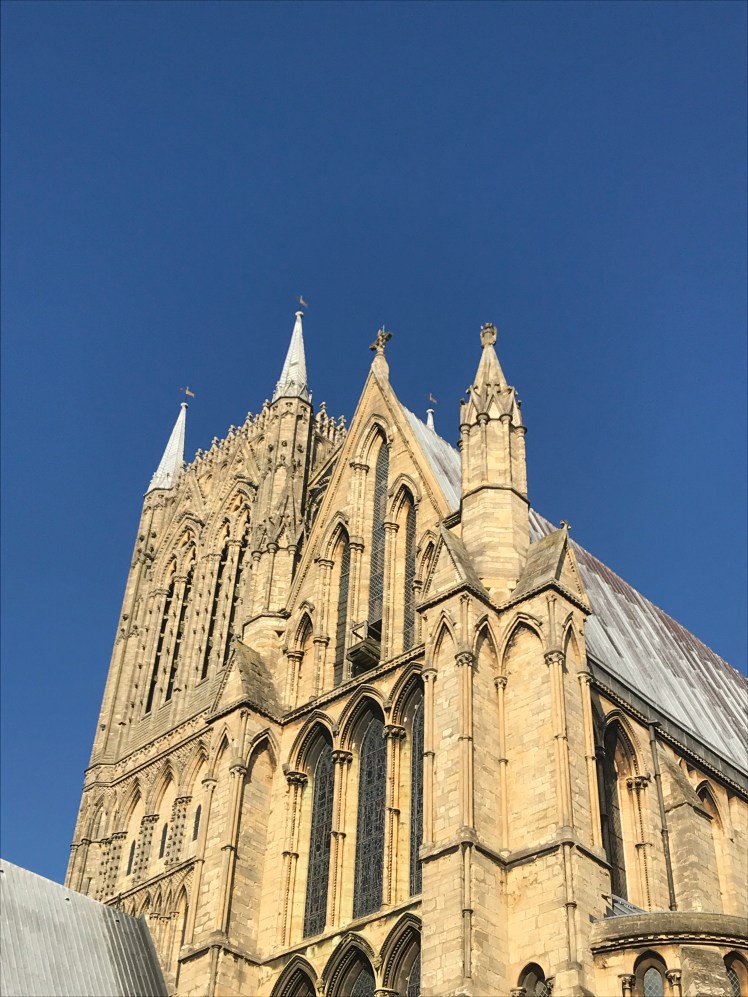
    Lincoln Cathedral is stunning, it sits on top of the hill dominating the surroundings . The stone is a soft colour and has been worked beautifully.

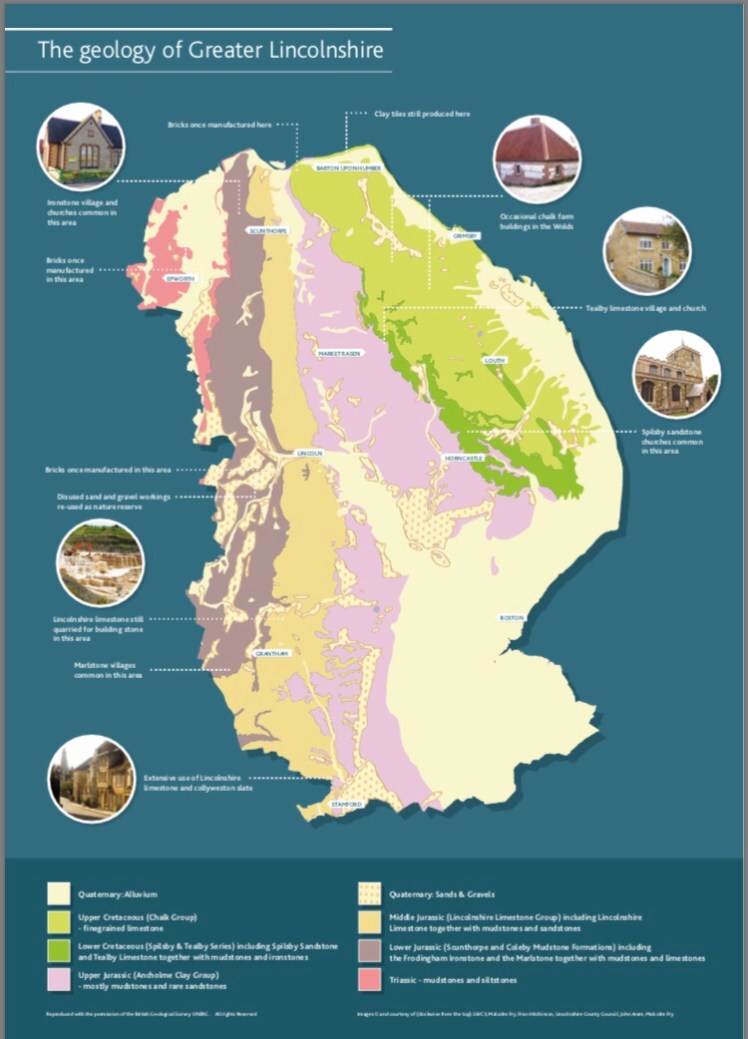
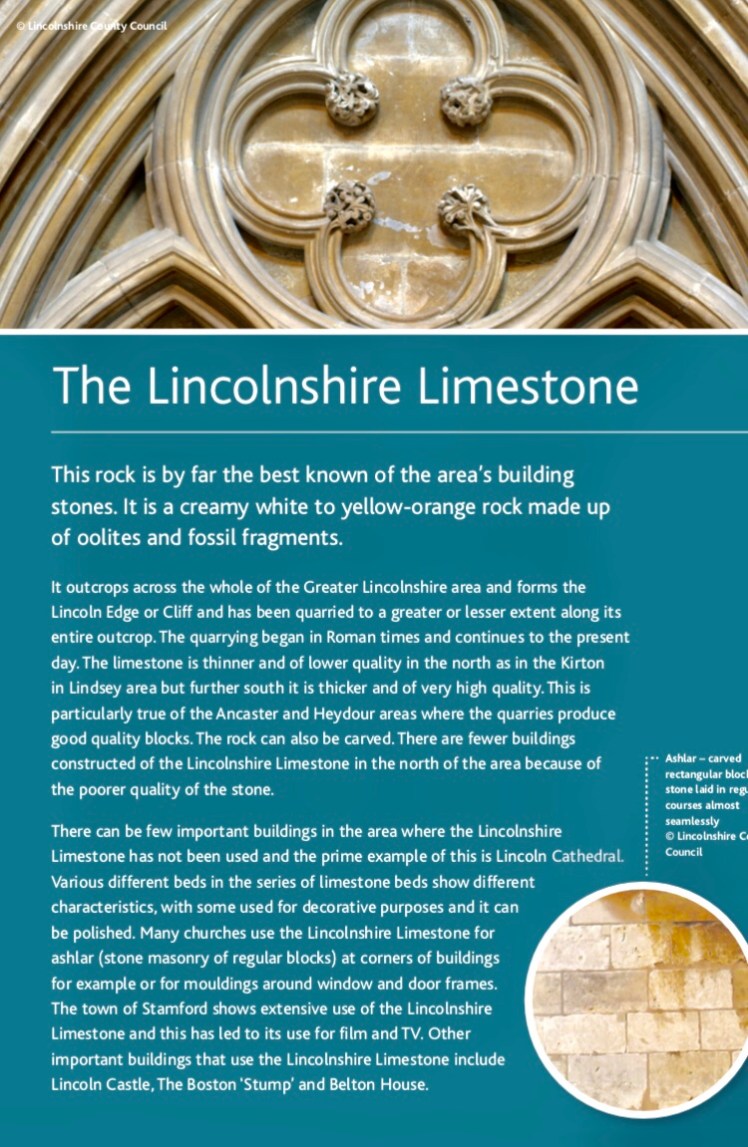
    The stone was quarried very close to the cathedral and tells an amazing tale .

    The rock that the cathedral is built from is the inferior Oolite Lincolnshire limestone. This was formed in warm shallow seas in the middle Jurassic (174-163 million years ago)

    It is made of Ooliths these are tiny spheres of calcium carbonate rather like sand grains.

    The Cathedral stands on an escarpment of this rock.

    This limestone was first quarried by the Romans to build a hilltop fort. Bishop Remequis used The limestone in 1072 to build the cathedral. He built it across a fault line and in 1185 it was partially destroyed in an earthquake. The cathedral quarry is a mile north. Recently with constant work needed on the cathedral has meant the quarry has been running out of the limestone,so other areas have been searched out by geologists to match the stone. Large areas are now built over and the rock is inaccessible.

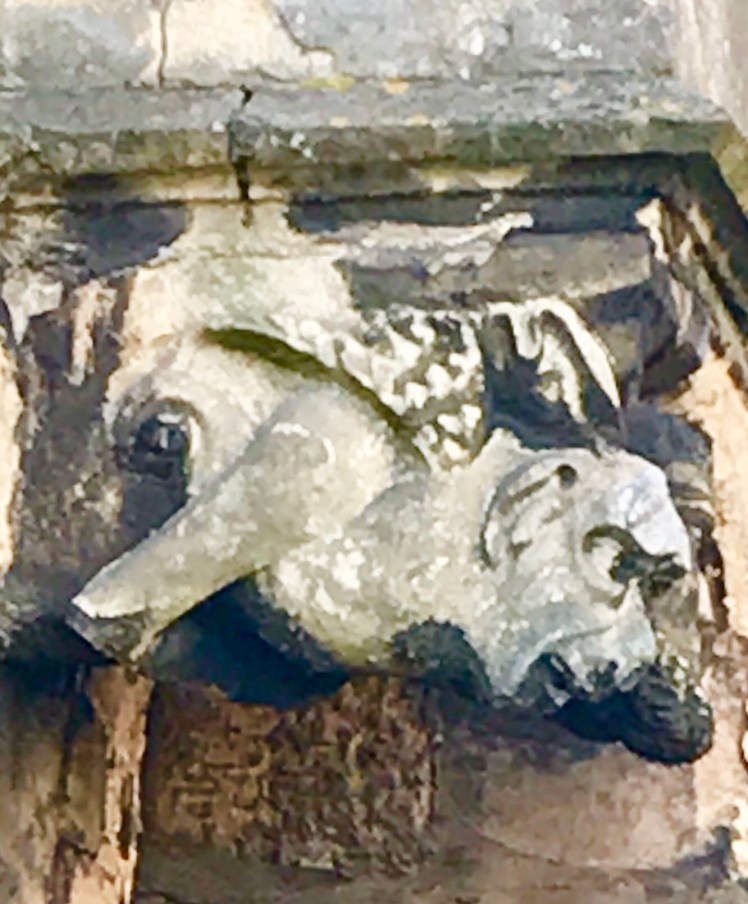
    Some of the carvings in the stone are fantastic, I loved this creature on the adjacent song school.

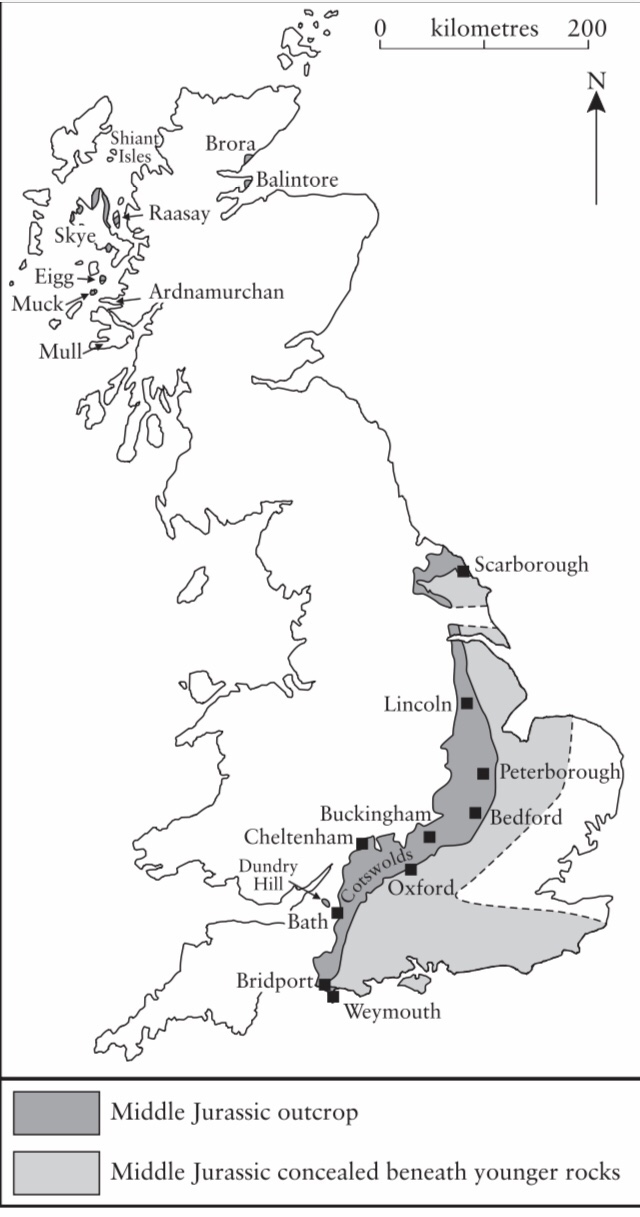
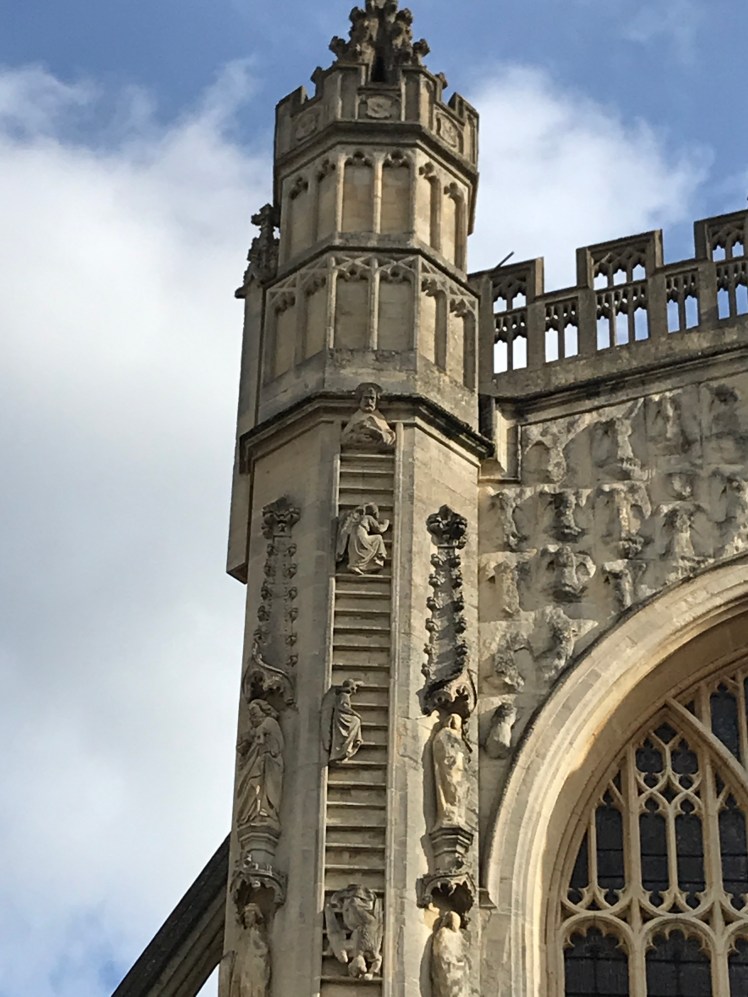
    Yesterday I was in Bath and marvelling at Bath Abbey a lovely yellow colour . It is built of Bath Stone . Interestingly Bath Stone is Oolitic limestone laid down in a shallow sea. Sound familiar ? If you look at the map of the middle Jurassic above with Lincoln on it you will also see Bath ! I have travelled in time from Lincoln to Bath on a Jurassic wave !

    Bath Abbey was founded in the 15th century but is on the site of an Anglo Saxon monastery from 757 which was pulled down by the Normans who started a Cathedral in 1090 which fell into ruin and parts became incorporated into today’s Abbey.

    The front of the Abbey has amazing ladders of Angels on either side. These were designed by Oliver King the Bishop of Bath after a dream about Angels ascending and descending above him.

    These two amazing buildings have a hidden link , the warm shallow sea of the middle Jurassic and the warm coloured Oolitic limestone that was laid down.

    Brilliant !

    Return to Holkham

    It didn’t take long until I was drawn back to the fantastic Holkham Beach .. only eight days.

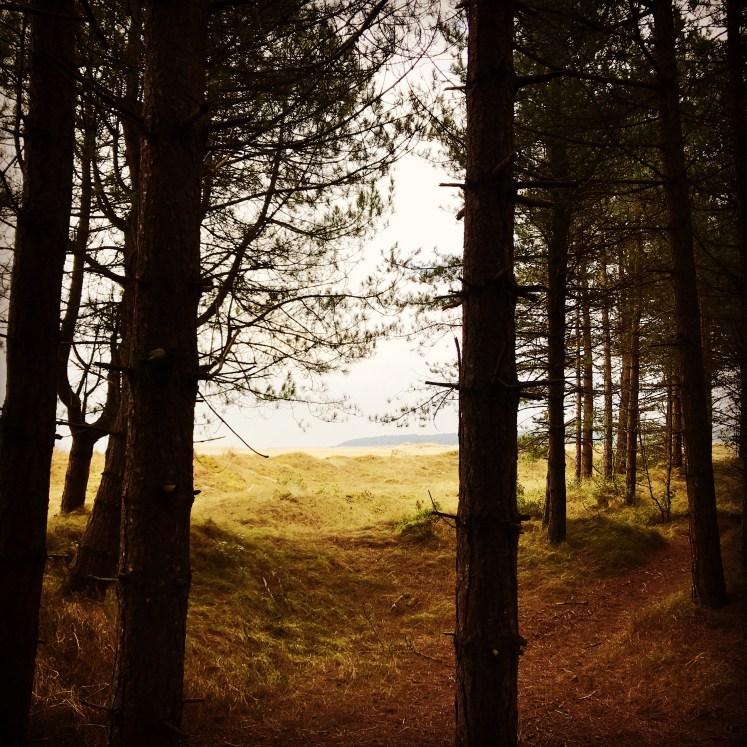
    The pine woods behind the dunes are a great place to explore and a super place to look out to the sea.

    Walking through the woods it is very quiet just a few crunching cones beneath your feet.

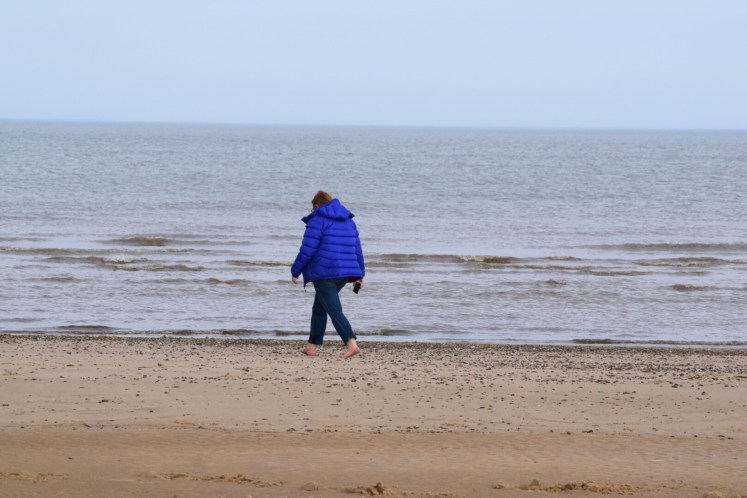
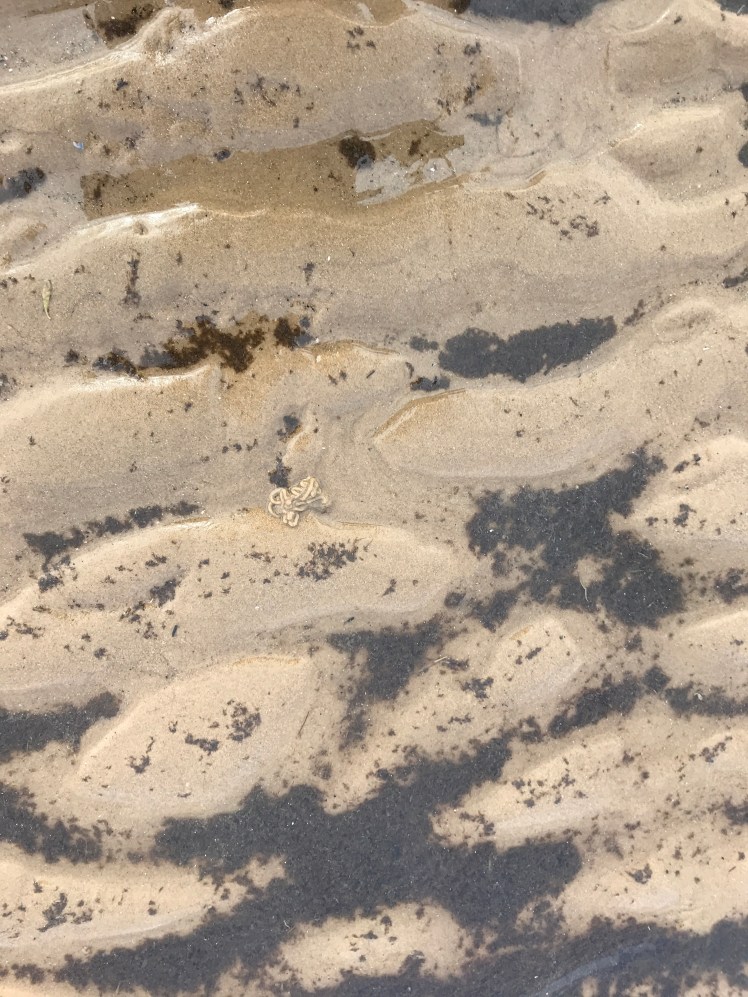
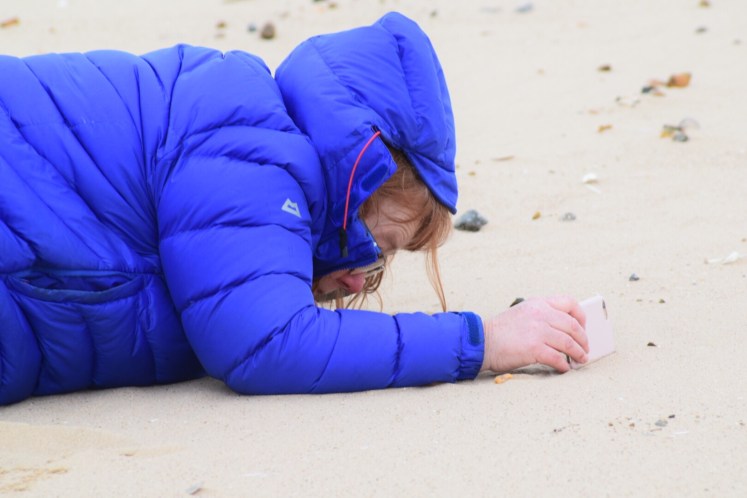
    On this return visit I couldn’t resist being barefoot on the sand and wading out into the sea, not too chilly!! I love the way the texture and surface of the sand changes across the beach, crunchy shells, firm ripples spongy soft and completely hard and flat.

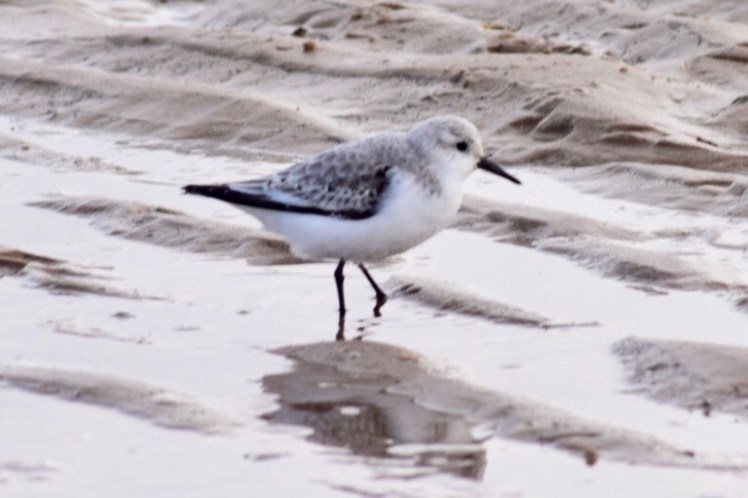
    Paddling in the shallows I followed some fantastic little energetic birds called Sanderlings, these birds are usually in small flocks , they run at speed following the waves in and out.

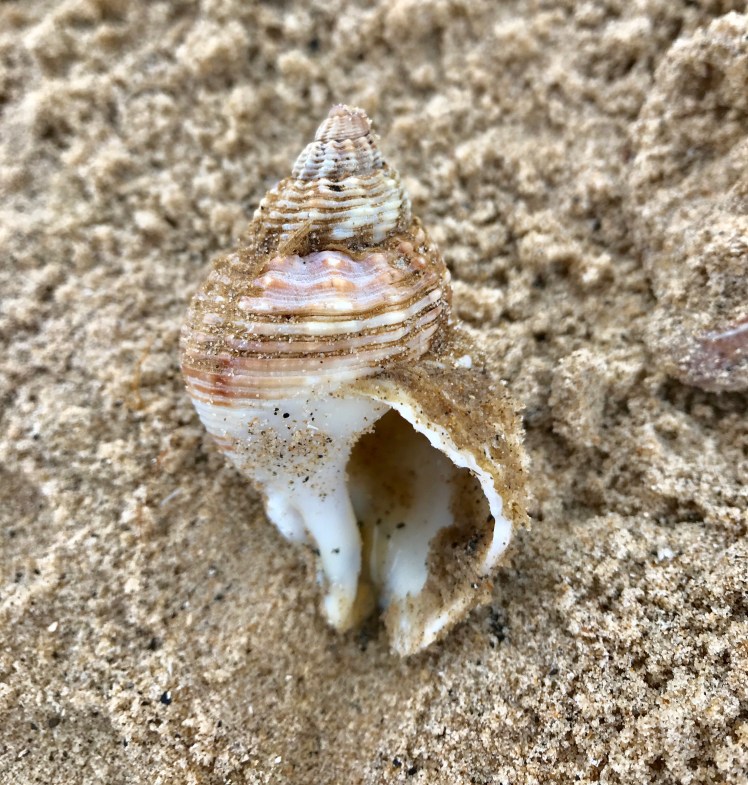
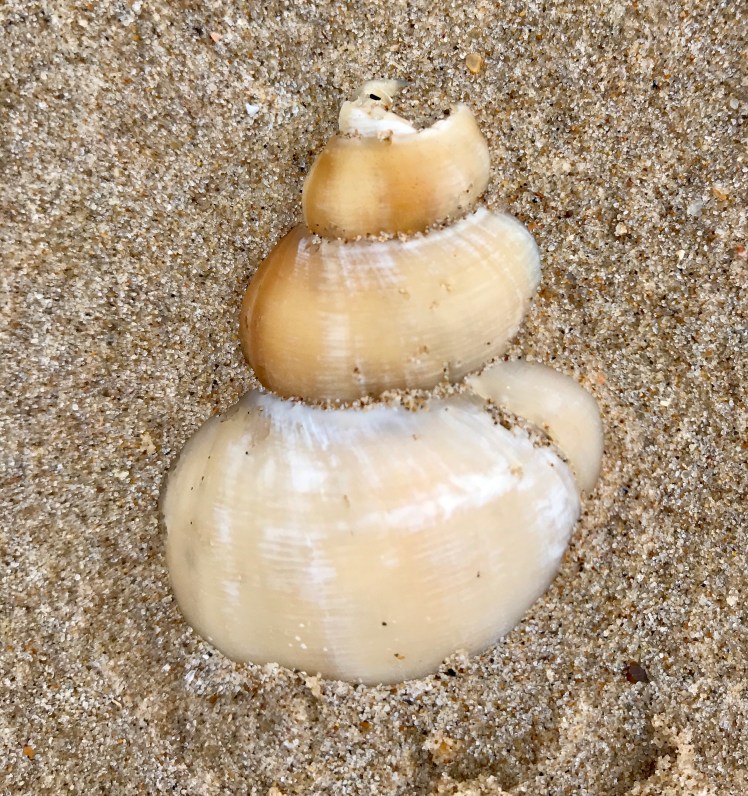
    The beach had areas of shells,the number of whelks is really high and they look fantastic in the sand , like a decoration.

    This visit to Holkham was full of wonderful birds , the sanderlings on the shore and the geese and others in the wetlands/ marshes.

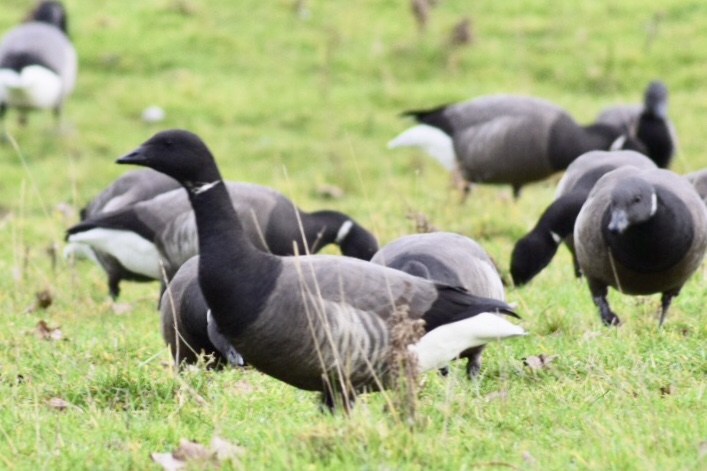
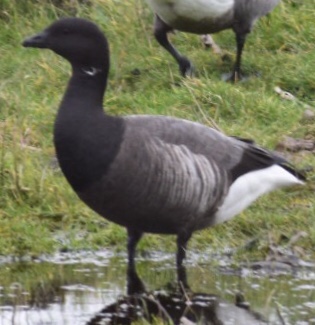
    The Brent Geese were in a large flock and were very noisy eating and often arguing with each other. They were great to see.

    There were a lot of photographers out looking at the flocks.I was amazed by the size of the lenses a lot of them had, they were huge!! I did have my proper camera but was definitely a few leagues down !!

    These Brent geese were very interesting to watch their behaviour.

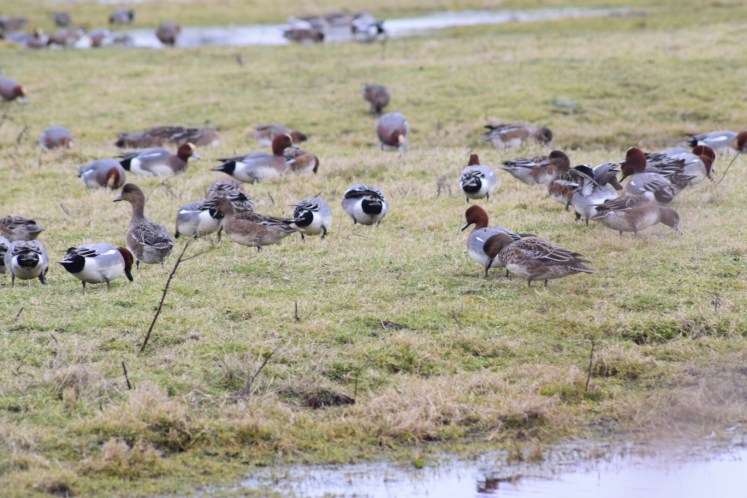
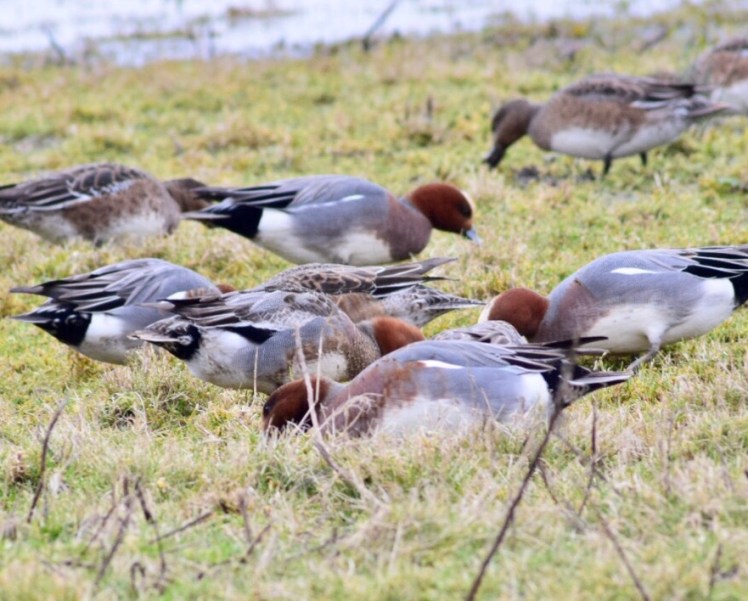
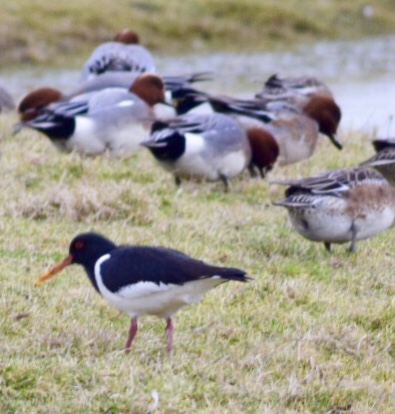
    The other birds in high numbers were Widgeon which are very attractive and again very interesting to watch.

    The first photo gives an idea of the number of birds. There are males ( with the ginger heads) and females.

    Another bird feeding on these wetland along with the Widgeon is a favourite of mine , the Oyster catcher.

    What these photos can’t show is the constant moving in and out of large numbers of birds and the sounds which they constantly make which are varied and wonderful.

    There is so much to see and discover and enjoy at Holkham I’ll be back very soon !

    There’s so much to see !!